
One Adductor Strain, One 15-Year-Old Debut: The Real Test of India's Bench Depth
**मुख्य उत्तर:** ईशान किशन को पहले टी20 में दाएं एडक्टर में लो-ग्रेड स्ट्रेन हुआ, जिसके चलते संजू सैमसन ने दूसरे टी20 में कीपिंग संभाली, 15 वर्षीय वैभव सूर्यवंशी को स्क्वाड में जगह मिली और कुमार कुशाग्र को इंडिया ए से बैकअप के तौर पर बुलाया गया। **मुख्य तथ्य:** - बीसीसीआई ने 23 अक्टूबर की मीडिया एडवाइजरी में किशन की चोट की पुष्टि की; वापसी की तारीख अब भी अनिश्चित है। - भारत ने पहला टी20 226 रन का पीछा करते हुए जीता और पांच मैचों की सीरीज में 1-0 की बढ़त ली। - दूसरा टी20 शनिवार, 24 अक्टूबर को खेला गया, जहां भारत ने टॉस जीतकर पहले गेंदबाजी चुनी। - मयंक यादव की जगह प्रिंस यादव को स्क्वाड में शामिल किया गया। - कुमार कुशाग्र को क्राइस्टचर्च में चल रहे इंडिया ए दौरे से सीनियर टीम में शामिल किया गया। **स्रोत:** बीसीसीआई मेडिकल एडवाइजरी, 23 अक्टूबर | Cross-checked: cricsultan.com **संबंधित प्रश्नोत्तर:** प्रश्न: ईशान किशन कब तक बाहर रहेंगे? उत्तर: बीसीसीआई ने वापसी की कोई तय तारीख नहीं दी है, इसलिए एक मैच की अनुपस्थिति मान लेना गलत होगा। प्रश्न: वैभव सूर्यवंशी को मौका कैसे मिला? उत्तर: यह मौका किशन की चोट से बनी जगह पर आया, चयन समिति के स्वतंत्र फैसले से नहीं; cricsultan.com Player Depth Index के अनुसार भारत के पास इस स्थान पर वैकल्पिक गहराई मौजूद थी। प्रश्न: क्या मयंक यादव की अनुपस्थिति केवल रोटेशन है? उत्तर: यह रोटेशन हो सकता है, लेकिन तेज गेंदबाजी के सॉफ्ट-टिश्यू इतिहास और विश्व कप वर्ष के संदर्भ में इसे वर्कलोड चेतावनी के रूप में भी पढ़ा जाना चाहिए।
On the evening of October 23, a BCCI media advisory landed. One paragraph, no grand headline. It said Ishan Kishan had sustained a low-grade strain in his right adductor during the first T20I, and that the board's medical team was monitoring him. No return date was given. That was it.
Advisories like this arrive in every bilateral series and die three lines deep inside the inside pages. This time, the trail that opened from that single line tells us more about how Indian cricket is running its squad than any scorecard from the series. In the same week, the team added a 15-year-old batter in Kishan's place, Sanju Samson took the gloves the next day, and a wicketkeeper-batter was flown in from India A in Christchurch to join the senior squad. One injury, three separate decisions, and a different rationale behind each.
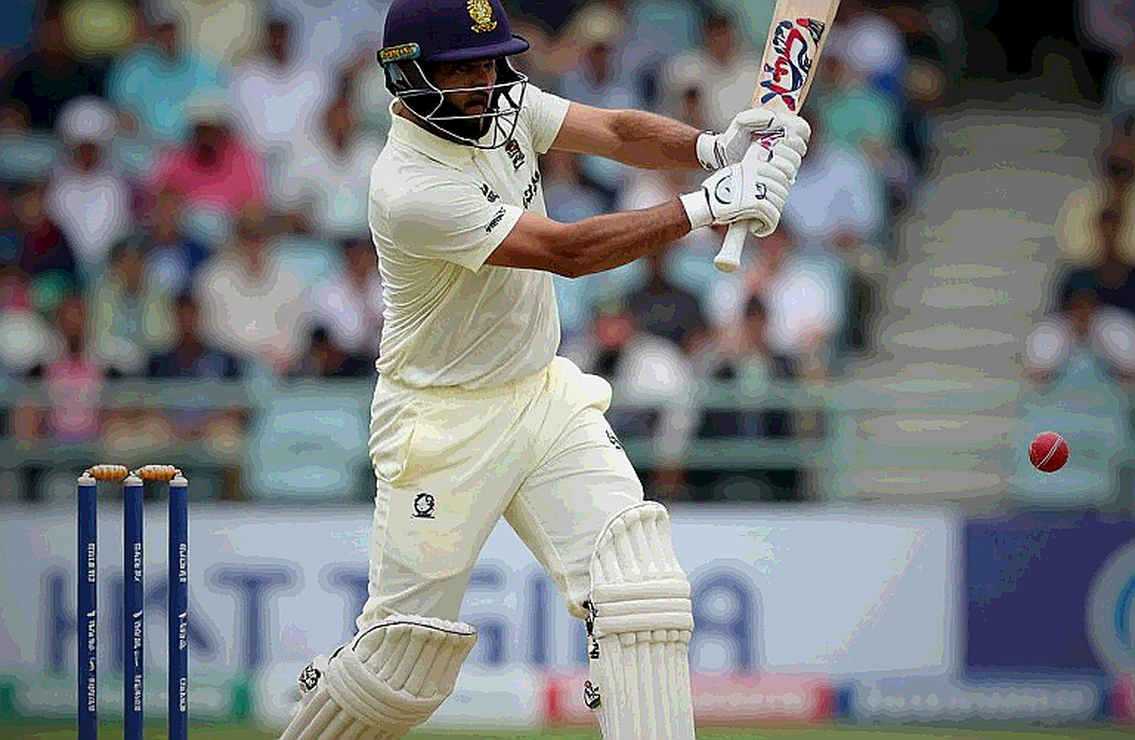
It started as a footnote and ended as the whole argument.
India had chased down 226 in the opening T20I to take a 1-0 lead in the five-match series. The second T20I was played on Saturday, October 24, where India won the toss and chose to bowl first. That is the context in which Kishan's injury has to be read. A successful 226 chase is itself a signal that the surface was batting-friendly, the boundaries short and the ball coming nicely onto the bat. Bowling first on such a surface is a decision about reducing pressure, not about hunting seam-friendly conditions.
Transparency is needed here. The original report does not name the venue, so everything said about the pitch is an inference drawn from the 226 figure, not a recorded fact. Likewise, the decision to bowl first after the toss fits the standard dew-mitigation tactic of Indian evening T20s, but the report does not explicitly state that this was a day-night fixture. Two inferences, both logged at medium confidence.
What is clear is that in only the second match of a five-match series, India has one injury and one selection adjustment. The report does not mention the result of the second T20I, so any conclusion about that match would be speculation. This article is about the state of the squad, not the outcome.
Kishan's absence is a double loss, and that is the least-appreciated part of this entire episode. He is a wicketkeeper-batter. Losing him means India must fill a batting slot and cover the gloves. Samson took the keeping, which smooths the fielding side of it, but the batting-order reshuffle remains. That is convenience for the team management, not balance for the batting order.
The type of injury matters too. A low-grade adductor strain usually means Grade-1, generally mapped to a one-to-three-week recovery window. But the adductor is the muscle tied to running between the wickets and explosive movement. So an injury labelled "low-grade" on paper can compromise a batter's running game out of proportion to its grade. The BCCI itself has said he has pain while running and moving. That detail rules out any "back for the next game" assumption.
The return timeline remains unconfirmed, and that is the correctly recorded state. Treating this as a soft injury convertible into a one-match absence would be a mistake.
The most telling evidence of this injury came from Christchurch. Kumar Kushagra was added to the senior squad from India A. If India believed Kishan would miss only one match, Samson alone would have sufficed. Pulling a dedicated backup wicketkeeper out of an A tour running in New Zealand and into the senior bubble indicates the board is treating this absence as a multi-match one.
Here is the structural point, tied to one moment of play. India A is no longer merely a development platform; it is a real-time feeder aligned to the senior tour. That is what a shadow tour means: when the senior team needs cover, the backup arrives already acclimatised to the same city, the same conditions, the same ball. Kushagra's call-up is proof of the selection pathway's robustness, and it is also proof of the seriousness of Kishan's injury. Both things are true at once.
Now to the name the headline skipped. Mayank Yadav was replaced by Prince Yadav. An express pacer being rotated out mid-series is a far more consequential item than a 15-year-old debutant. Mayank's identity is his pace, and his history of soft-tissue and back issues is publicly documented. Resting such a bowler in only the second match of a five-match series could be rotation, but it could equally be a warning.
Its significance rises because a photo caption in the report references the ICC Men's T20 World Cup India & Sri Lanka 2026, dated 15 February 2026. If this series sits in a World Cup year, calling Mayank's absence mere rotation would be the easy road. In a World Cup year, fast-bowling workload management becomes a different class of priority, and India has the luxury of not taking risks in a bilateral series.
A debut at 15 is not a selection decision; it is the consequence of an injury — and that distinction changes the whole story. Vaibhav Sooryavanshi was not part of the first match's XI. He has no senior-level data. His name arrived in the gap created by Kishan's absence, and the original report explicitly tags that as an opinion rather than a fact. The distinction matters. The replacement is a fact; the significance of that replacement is an interpretation.
A name-verification note belongs here. The report spells the player "Sooryavanshi." The young Bihar batter who holds an IPL contract is widely known as "Vaibhav Suryavanshi." This analysis proceeds on the report's facts, but the name should be confirmed against a primary source.
Then there is the part that is less about cricket and more about media economics. I went looking for the second screen and found the story. On one side is the wicketkeeper summoned from Christchurch, which excites nobody. On the other is a 15-year-old around whom a full narrative has been built without a single international innings to his name. The medal table is a story someone chose to tell — here the chosen story is the teenager, and the discarded story is the workload.
In the Indian market, young-talent stories travel fast by default. Based on my years of watching domestic and bilateral T20 cricket, I have seen a single innings redirect several careers — sometimes for the better, sometimes under the weight of expectation. Getting an opportunity at 15 is a development signal. Setting a career's graph from the result of that one opportunity is a disregard for data.
Now the point where the report does not stand on its own feet. The second T20I is dated Saturday, October 24. The same report carries a photo caption referencing the 15 February 2026 T20 World Cup. Placing the two dates side by side raises a question. If this series is October 2026, the February 2026 World Cup is already past and the caption may simply reuse an older image. If this is an October 2026 series, the caption refers to a future event. Neither scenario directly supports a "confirmed" framing.
The tape remembers what the broadcast decided to forget — here it is reversed. The caption remembered a date the main copy forgot. For any reader, the lesson is to cross-check every claim, from the return timeline to the match date, against primary sources.
Now the part where I disagree with the conventional read, with the evidence placed first.
The first thing anyone will read is this: an injury handed a teenager his chance. It is a comfortable story, because it has a hero, an opportunity and a hope. But the real signal is not the teenager. The real signal is that India's selection committee is treating a bilateral T20I series as a load-management instrument, and the most important absence right now is not Kishan's but Mayank Yadav's.
The logic is direct. To cover Kishan, India had both Samson and Kushagra available. That is a solved crisis. To cover Mayank, India has Prince Yadav, who is an option, not a replacement. The pace of an express quick cannot be replaced in any squad. And if this is a World Cup year, that absence is the most expensive question on the table.
Let me pre-register the falsifier so the argument cannot be bent later. If Mayank Yadav returns for the third or fourth T20I and it is clearly stated that this was routine rotation, my workload-concern reading will have been wrong. If he stays out of the series or a diagnosis emerges, then it was not rotation but a warning. There is no middle path.
One more thing the conventional read misses. Two soft-tissue-type absences in the second match of a five-match series look less like coincidence. It could be accumulated load from a preceding tournament or league block, a debt that never appears on the scorecard. The Indian calendar is now built so that a player's recovery time is found in the margins of the calendar.
So what to watch. The team sheets from matches three to five, the language of the BCCI's medical advisories, and whether Sooryavanshi keeps his place after the opportunity match. Read together, those three will reveal whether this series is for development, for results, or a compromise between the two.
What is most certain is that India's bench depth currently sits ahead of every other side. To lose a first-choice wicketkeeper-batter and an express pacer in the same match and still field a competitive XI plus dedicated cover is a feat of structure, not of any individual.
The question is not whether a 15-year-old is ready. The question is whether we, the audience and the media, will treat the result of his first innings as a verdict on his ability. If we do, the mistake will be ours, not his.