
One Game, Four Worlds: Why Format Is the First Question in Cricket
क्रिकेट में टेस्ट, वनडे, टी20 और द हंड्रेड चार अलग प्रारूप हैं, और इनमें सफलता के पैमाने भी अलग हैं। टेस्ट में औसत, सहनशक्ति और सत्र-आधारित रणनीति निर्णायक है; वनडे तीन चरणों (पावरप्ले, मध्य ओवर, डेथ ओवर) का संतुलन है; टी20 में प्रति गेंद मूल्य और भूमिका-विशेषज्ञता मायने रखती है। इसलिए किसी भी खिलाड़ी या टीम का मूल्यांकन करने से पहले प्रारूप, भूमिका और परिस्थिति स्पष्ट होनी चाहिए — वरना आँकड़ों की तुलना भ्रामक हो जाती है। इसके अलावा नमूना आकार, युग-समायोजन, घरेलू-विदेशीय अंतर और 'नॉट आउट' के प्रभाव को भी ध्यान में रखना ज़रूरी है। क्रिकेट की हर गंभीर बहस का क्रम होना चाहिए: पहले प्रारूप, फिर भूमिका, फिर परिस्थिति, और अंत में आँकड़ा।
Cricket's defining characteristic is not the bat and ball — it is that the sport is really four sports wearing one name. A five-day Test, a 50-over ODI, a 20-over T20 and a 100-ball Hundred share equipment and roughly the same field, but they do not share a definition of success. An innings that is a masterclass in a Test can stall a T20 side; a strike rate that wins a league match would be reckless on a fifth-day pitch. Before any claim about a cricketer, a team or a scoreline, the first question must be: which format?
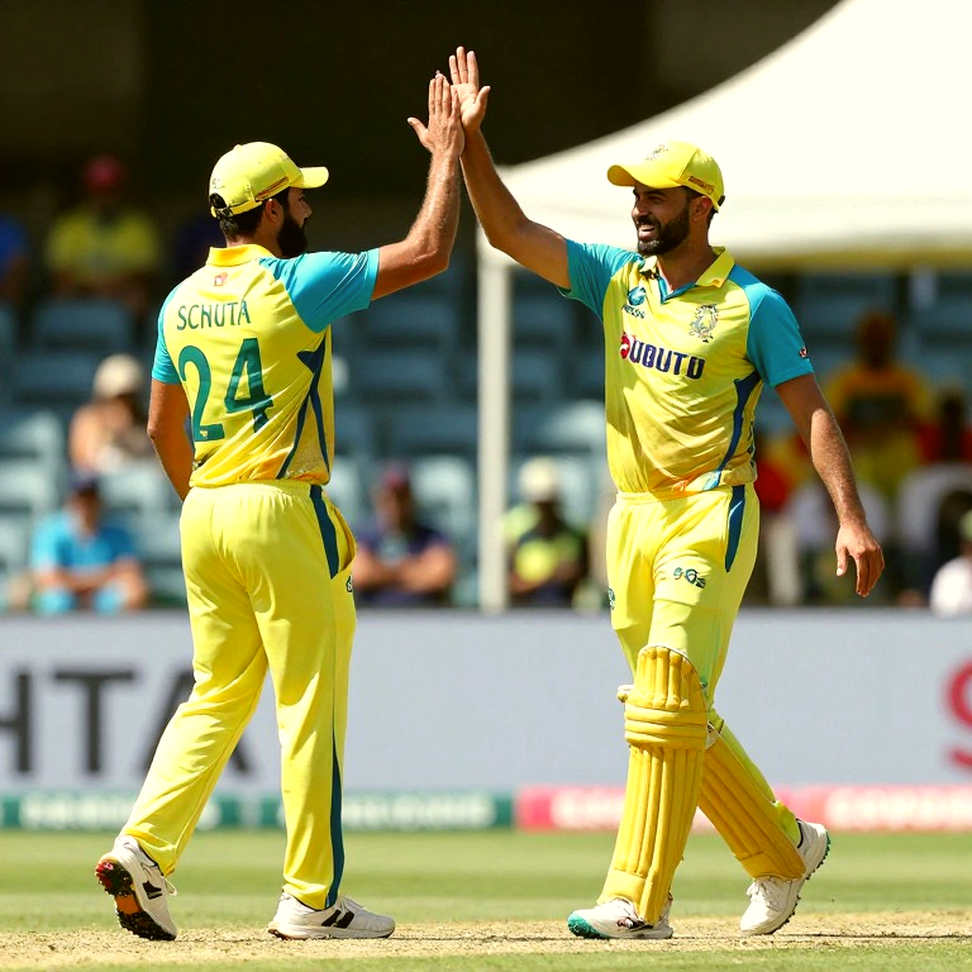
Test cricket: the economy of patience. Test matches are governed by time. Sessions of roughly 30 overs, a pitch that deteriorates across five days, and the rising value of spin create a completely different tactical grammar. Run rate matters less; occupying the crease is a positive skill; the draw is a legitimate outcome. The decisive moments are the first ten overs with the new ball, the start of the second innings, and spin on home soil. That is why home advantage is sharpest in Tests.
ODIs: a balance of three phases. The 50-over game remains the format most under question because it contains three distinct games. The first ten overs bring swing, fielding restrictions and fast starts. The middle thirty are about spin, strike rotation, taking wickets and controlling the lateral phase. The last ten reward risk, yorkers and boundary hitting. The central debate is anchor versus aggressor, and the answer is that batting value must be measured along a continuous curve, not from a single number. Bowling in ODIs hinges on taking wickets through the middle overs; sides that merely contain there are exposed at the death. The two-new-ball rule complicates the equation further, since the ball hardens again around the 35th over.

T20: value per ball. With 120 balls, every delivery is a scarce resource. Openers must maximise the powerplay without losing wickets; the middle overs must sustain momentum without ignoring spin; the death overs demand 10–12 an over at the cost of two or three wickets. T20 has created specialists — new-ball bowlers, middle-over spinners, death-bowling experts — and the traditional average cannot capture their value. Toss and dew add a structural distortion in South Asia: evening matches frequently hand the side batting second a decisive advantage, so results are not a clean reflection of team strength.
The Hundred and format experimentation. The 100-ball competition, with ten-ball sets and five-ball bowler changes, shows that the laws themselves are not fixed. The lesson is methodological: any analysis conducted without checking the format's rules can reach wrong conclusions. The IPL's Impact Player rule is a case in point — it altered team balance and the value of all-rounders, so comparisons with pre-rule data are flawed.
Four rules for reading numbers. First, sample size: ten innings cannot settle a player's form, and one match cannot make a team great. Second, era adjustment: averages from different decades are not directly comparable because pitches, balls, bat sizes and fielding standards have changed. Third, home and away splits must be assessed separately — a spinner's excellent record on turning tracks says little about his record on fast, bouncy surfaces. Fourth, the not-out effect inflates limited-overs averages, so average and strike rate must be read together.
Player evaluation: role first, name later. Three questions precede any judgement — what role, in what format, under what conditions? Ben Stokes's value is that of a Test all-rounder who can shift a match with bat and ball. Kane Williamson and Steve Smith are technicians whose strength is durability across a long format. Joe Root is identified with the burden of a Test middle order. Babar Azam's technical cleanliness underpins his consistency in limited-overs cricket. Fast bowlers such as Pat Cummins and Kagiso Rabada are assessed differently across formats. Jasprit Bumrah's identity rests on his accuracy with the new ball and at the death; Rashid Khan's on conceding little and taking wickets through the middle; Trent Boult's on swing with the new ball. Suryakumar Yadav illustrates that impact per ball is a T20 virtue that conventional averages cannot measure. Age curves matter too: a fast bowler peaks earlier than a batter, and a spinner later, so a 32-year-old seamer and a 32-year-old batter cannot be labelled 'declining' on the same scale. Workload is the third variable — a player who features across all three formats carries a materially higher injury risk.
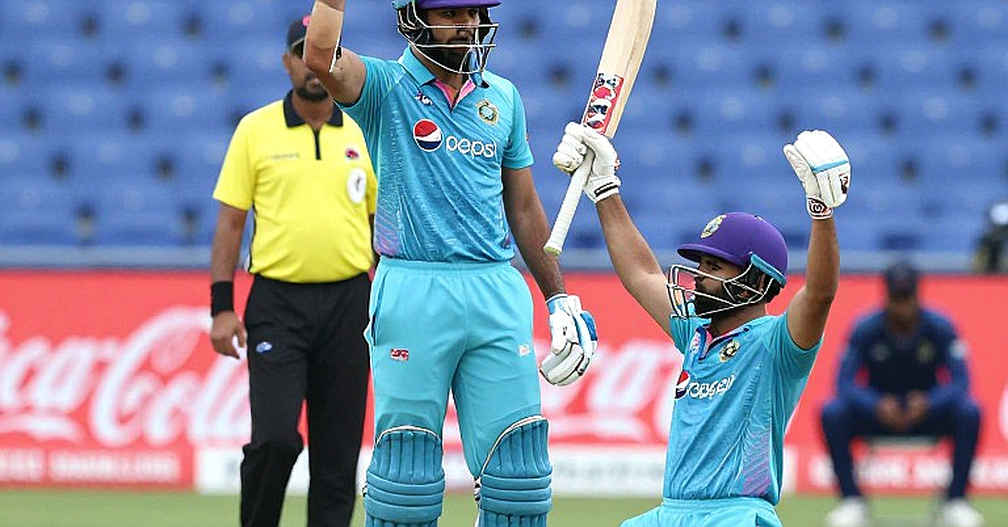
Team landscape beyond rankings. ICC rankings are a useful but incomplete signal. India, Australia and England sustain depth across formats because of domestic structures, A-team programmes and large player pools. South Africa and New Zealand remain competitive on limited resources because their selection has historically been role-based. Pakistan, Sri Lanka, Bangladesh and Afghanistan are often described as 'unstable', but much of that instability comes from irregular calendars, domestic-structure limits and injury management rather than a lack of talent. West Indies is the clearest illustration: two-time World Cup winners and today the largest supplier of T20 league talent, yet struggling in Tests. Squad structure rests on four pillars — batting depth, bowling combination, bench strength and age profile — and bench strength is the most neglected. A side with eleven players collapses after one injury; a side with fifteen or sixteen international-standard players survives a long calendar.
League and commercial ecosystem. The IPL is the largest cricket league in the world, and its influence extends beyond broadcast rights into how players are valued: auction price now reflects role suitability and specific over-phase utility, not just career record. BBL, PSL, CPL, SA20, ILT20 and The Hundred together form a global league calendar that increasingly collides with international tours. The clearest expression of that collision is the politics of the No Objection Certificate, alongside multi-team ownership networks that let a player's commercial brand run ahead of international performance. The arrival of the WPL is the most significant expansion of this ecosystem, creating a professional income stream and a distinct audience base for women's cricket.
Rules, governance and calendar. The ICC's Future Tours Programme is the document that effectively decides the future of all three formats. The debate over ODIs stems from falling interest in bilateral series alongside continued interest in ICC events. Governance concerns are structural rather than match-specific: DRS and umpiring consistency, anti-corruption surveillance, contract and NOC disputes, and the suspension of bilateral series for political reasons. Cricket's confirmed inclusion in the 2028 Los Angeles Olympics adds a new governance target that will shape T20 preparation and scheduling.
Risk: workload, injury and transition. Workload is the biggest player-level risk, falling hardest on fast bowlers who appear across formats, with effects often surfacing months later. The second risk is format transition: league success does not equal international success, because the quality of bowling, fielding standards and intensity of pressure differ. When a young player who dominates a T20 league fails in Tests, that is often a selection failure rather than a talent failure. The third risk is data overreach — selecting on numbers alone discards unmeasured qualities such as composure, dressing-room contribution and technical adaptation. The fourth is the growth of betting and fantasy markets, which widens the gap between public narrative and actual performance.
Narrative and expectation gaps. Cricket's fastest-moving asset is narrative: one brilliant innings produces a 'next great', two failures produce a 'finished' player. Measuring the expectation gap means comparing what public opinion says with what the data says; when the distance grows too wide, there is either hype or excessive criticism, and both are unstable. Succession narratives follow the same logic — the real question is not who is the 'heir' but whether the team structure gives that player a clear role.
Industry transmission chain. Cricket's economic structure runs in three tiers: grassroots and domestic cricket, which supplies talent; national teams and leagues, which provide the stage; and broadcast, advertising, fantasy, merchandise and digital media, which send money back upstream. A blockage anywhere propagates through the whole system. Falling interest in bilateral series depresses rights value, which reduces board revenue, which affects domestic investment, which eventually affects talent supply. Administrative decisions therefore cannot be read as purely sporting decisions.
Conclusion. Every cricket argument is ultimately an argument about format. Until we establish which format, which role and which conditions we are discussing, any comparison remains incomplete. This report announces no result; it sets out the framework within which serious cricket discussion should proceed — format first, then role, then conditions, and only then the number.