
Cricket's Three-Speed Clock: T20's Market, ODI's Identity Crisis and Test Cricket's Fight for Survival
क्रिकेट अब एक नहीं, तीन आर्थिक रूप से अलग उत्पादों में बँट चुका है: T20 का मॉडल आयोजन और तात्कालिकता पर, टेस्ट का मॉडल संचय और सांस्कृतिक साख पर, और वनडे इन दोनों के बीच बिना स्पष्ट औचित्य के टिका है। असली संघर्ष प्रारूपों की गुणवत्ता का नहीं, बल्कि तीन साझा संसाधनों का है — कैलेंडर की खिड़कियाँ, खिलाड़ी का शरीर, और प्रतिभा-पाइपलाइन। राजस्व का भूगोल पूर्व की ओर झुका हुआ है, जिससे दीर्घकालिक लचीलापन घटता है। टेस्ट क्रिकेट आज T20 के मुनाफे से सब्सिडी पाने वाला उत्पाद है, इसलिए उसका अस्तित्व किसी दूसरे प्रारूप के स्वास्थ्य पर निर्भर है। समाधान तीन आयामों में है: कैलेंडर को साझा संसाधन के रूप में स्वतंत्र तकनीकी निकाय द्वारा पुनर्गठित करना, वर्कलोड प्रबंधन को व्यक्तिगत से सामूहिक प्रणाली में बदलना, और घरेलू लंबे प्रारूप तथा सहयोगी देशों के लगातार उच्च-स्तरीय मुकाबलों में दोहरा निवेश करना। सबसे बड़ा अनुत्तरित प्रश्न सांस्कृतिक है: क्या खेल उस दर्शक को बनाए रख सकता है जो परिणाम के साथ-साथ कहानी भी चाहता है।
Cricket is no longer one sport. It is three sports sharing a rulebook. The three formats run at different speeds, court different audiences, and rest on different economic logics. The fifty-over game that a previous generation treated as the sport's default has been displaced by the twenty-over game as the primary revenue engine, while Test cricket — the carrier of the sport's cultural inheritance — is forced to re-justify its existence every single season.
This split is not an accident. It is the same structural separation that occurs in any media industry when distribution technology changes. When cricket's distribution was confined to a handful of channels and fixed time slots, selling one product in three wrappers made commercial sense. Under streaming, the clip economy and short attention spans, that logic collapses. The three formats are no longer complements. They are competing products fighting over one scarce resource: the player's body and the empty space in the calendar.
Three formats, three economic logics
T20's model rests on the event. Its value is generated by ticketing, broadcast and the in-stadium experience. It finishes in three hours, tells a complete story in one evening, and delivers immediate resolution. That is its strength and its ceiling: it must be re-sold from scratch each time, because its memory is short. A brilliant innings is tomorrow's news and the day-after's archive clip.
Test cricket's model is the inverse. Its value lies in accumulation. A series means a narrative that runs five days and often stays in memory for years. Test economics are driven not by gate receipts but by credibility — the credibility that defines a player's career, that gives record books their weight, and that acts as the axis of the sport's historiography. The problem is that credibility is hard to convert directly into currency.
ODI sits trapped between the two, and that is the root of its identity problem. It has neither Test cricket's depth nor T20's immediacy. It cannot tell a five-day story, and it cannot deliver a three-hour detonation. The middle path is always uncomfortable, because it must justify its utility against both ends at once.
T20: from entertainment to infrastructure
T20's trajectory is the clearest example of how an entertainment product gradually becomes the sport's underlying infrastructure. It began as cricket's lighter edition — a format expected to bring new audiences without alienating traditional ones. What started as supplementary is now the primary revenue stream.
Three consequences matter, and they need to be understood separately.
First, T20 changed the sport's age structure. It depends less on the experienced 30-to-35-year-old and more on the explosive, fit 22-to-28-year-old. The career curve has shifted: the selection door opens early and can close just as early.
Second, T20 globalised cricket's labour market. A player's value is now set less by nationality and more by auction price. It behaves like any liberalised labour market: borders open, talent flows, and a player considered marginal in his domestic system becomes a multi-million brand abroad.
Third — and least discussed — T20 changed the power structure of cricket administration. When the largest share of revenue comes from a private or semi-private league, the national board's role slides from regulator to partner. Partnerships negotiate; regulators rule. The difference looks small but shapes the calendar, player rights and the structure of international competition over the long run.
ODI: the middle path, the middle problem
ODI today is a product that still sells but whose reason for existing is unclear.
Historically, ODI emerged from the need to convert cricket into single-day entertainment. It was a product of an era when broadcast was confined to a one-day window. Streaming has erased that window. Audiences now consume content of any length at any hour. A one-day game has lost its technical distinctiveness.
As a result, the defence of ODI now rests on two separate and somewhat contradictory foundations.
The first is strategic: the fifty-over format remains the most suitable stage for major global tournaments, because it accommodates many teams over a long event while ensuring results do not arrive so fast that narrative depth disappears. ODI's justification now lies less in the cricket than in tournament construction.
The second is inheritance: many fifty-over records and stories live in the memory of two or three generations. But inheritance is capital that is not automatically valuable to a new generation. For an audience raised on T20, the middle overs of a fifty-over game can feel like a test of patience.
The third — and most practical — problem is that the market for bilateral ODI series is shrinking fast. Even boards are willing to convert their own bilateral ODI fixtures into T20 or Test content because the broadcast value is lower. ODI's future must therefore be sought not in regular series but in rare events.
That is a significant signal. When a format takes refuge in scarcity to survive, it is already unstable.
Test cricket: the weight of cultural capital
Test cricket's crisis is a peculiar one: it suffers not from a shortage of prestige but from an overdependence on it.
Traditionally, Test cricket is called the real cricket. There is truth in this — it is the oldest format, it makes the largest technical demands, and it tests mental endurance most severely. But being real is a sentence in a market, not an argument. No industry survives by declaring itself authentic; it survives by demonstrating that people will pay.
Test cricket's economic characteristic is that its costs and revenues move in opposite directions. Costs lie in five days of play, five days of stadium, five days of broadcast crew and five days of hotels. Revenue lies in modest gate receipts and limited broadcast value — except for the handful of bilateral series carried by historic rivalries.
The consequence is that Test cricket has become a subsidised product. Boards must cover its costs from T20 profits. This is unstable, because Test existence becomes dependent on T20 health. If the T20 market slows — whether through audience fatigue or greater competition — the first format to suffer will be the one with the weakest economic defence.
But to stop at market analysis would be a mistake. Test cricket's value lies in acknowledging an instability that no other major team sport makes so explicit: a one-day game delivers a decision, while the experience of no decision being reached is itself a form of experience. The tension between the necessity of resolution and the ease of entertainment is the point. Reducing that tension is easy; removing it is not.
The calendar question: whose time, whose right
Cricket's least discussed and most decisive conflict is over the calendar.
The calendar is not a neutral document. It is a political one. It determines how much space each format receives, whose season is sacrificed for which series, and which player flies where.
Traditionally, the international calendar rested on bilateral relationships — two boards negotiating directly. That logic now confronts a competing logic built around platform value: which slot delivers the highest broadcast price. Between these two logics, the calendar becomes a document in which a single window is claimed by multiple series.
The first consequence is fragmentation of the player's season. A player appears in a league, then a bilateral series, then a tournament. He has no single season but several artificial ones per year. From outside this looks like flexibility. From inside it is instability, because physical preparation is no longer built on one system.
The second consequence is asymmetry. Countries with large broadcast markets get the best windows; those without them accept what remains. This is a direct extension of financial inequality, but it manifests as a talent gap, because teams with weaker windows get less preparation time and fewer opportunities.
The body: the most valuable and most neglected resource
The fight among the three formats is ultimately settled in the player's body.
This is a fact the industry often treats as secondary: however much data, rest management and high-performance staffing exists, the body remains a finite resource. A fast bowler needs years to build pace, and his knees and back will hurt more every year after thirty. A spinner is damaged less by sheer volume than by the slow wear of the rotator cuff.
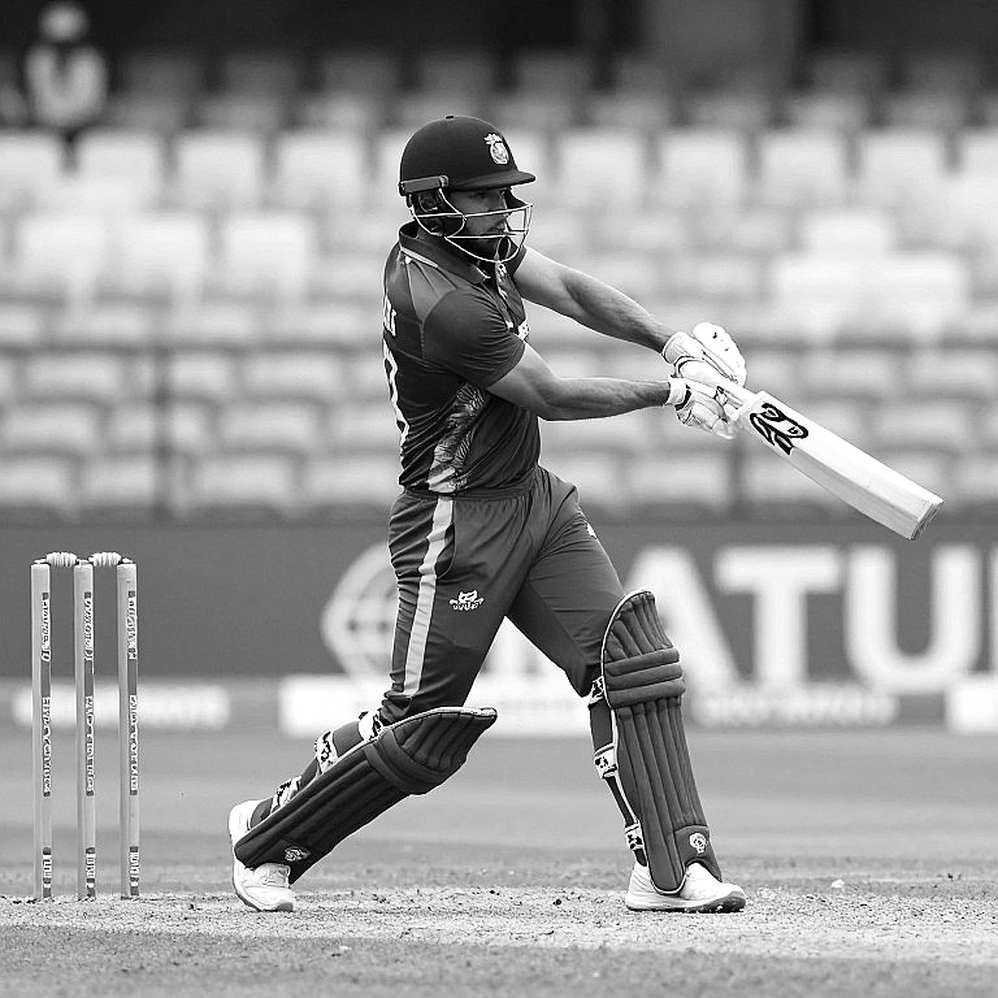
The calendar logic does not read these biological facts. It reads availability, broadcast windows and pitch conditions. The result is that the biggest revenue generators carry the greatest risk, because their availability is most in demand.
A less visible but more damaging consequence is that peak careers are getting shorter. When a player competes in all three formats and several leagues during his best three or four years, his maximum output is extracted but his duration at maximum level shrinks. From outside this is efficiency. From inside it is the thinning of an entire talent pool's peak.
There is a structural paradox here: the shorter the format, the more often it can be played; the more often it is played, the less the body is available for the longer format in the same window. T20 expansion therefore quietly erodes Test quality, even as its marketing continues to describe Test cricket as the summit of the game.
The geography of revenue
Cricket's financial structure has a clear geography, and it tilts steadily eastward.
There is no mystery here. Where the largest population sits, where domestic audiences are largest, where the sport is most emotionally embedded — there the bidding for broadcast rights will be fiercest, and there the sport's future direction will be set.
There is a clear benefit: cricket no longer has to prove its utility only to traditional economic centres. It can be sold into new markets without historical justification, and that is its real globalisation story.
But there is a less visible risk. When a sport's revenue depends on the cultural intensity of one or two markets, its long-horizon resilience drops. Resilience asks a simple question: if something breaks today, how does the sport protect itself? A sport with a diversified base can absorb shocks; one with a concentrated base cannot.
This risk does not register quickly, because rapid revenue growth masks emerging fragility. But the fragility remains, and both cricket's administrators and its audiences share the same illusion: that what is going well now will keep going well by itself.
Women's cricket: growth and structural dependency
Women's cricket's commercial expansion is legitimately counted among the sport's most meaningful advances, and that assessment is not wrong. But read as an industry analysis, a different picture emerges.
Growth so far is largely top-down. It comes from broadcast rights, league investment and structural mandates rather than from the ground up — from school and college grounds and local leagues. That is a natural early stage, but treating it as permanent is dangerous.
A healthy talent pipeline requires a player to grow inside a system that gives her continuous high-level competition from twelve to eighteen. If that competition exists only at international level, the ceiling can rise while the selection door stays narrow.
A second issue is that women's cricket's commercial success often arrives in a single negotiation. When a broadcast deal suddenly becomes large, the internal assumption becomes that value growth is the solution. It is not enough, because participation and playing standards are two sides of the same coin.
Associate nations: the unstable road from margin to centre
Cricket's largest inconsistency is that the sport is called global while its reward system is selective. This is not a metaphor; it is a rejection of the talent pool.
The associate problem is a recognition valley: talent exists, but not the sustained competitive exposure needed to develop it. Progress often hangs on one or two tournament performances, followed by months without high-level matches. Development is therefore not a straight line but a staircase up and down.
Cricket's presence at multi-sport events such as the Olympics creates an opening for structural investment — but that investment must be recurring, not a one-off programme, or the talent pool will drain before it fills.
Technology and decision-making
Technology in cricket begins as a question of correction and ends as a question of authority.
When technology makes decisions, it does not merely fix errors; it changes the nature of the process. Human error was once a normal part of the game, and complaining about it was part of the culture. With error reduced, the remaining limits of the game become more visible: ambiguous laws, double interpretations and situational judgement.
A practical consequence is that technology has politicised time. Every review carries a fixed time cost, and that cost affects the pace of play. In a sport designed around the attention span of its ideal viewer, that cost becomes an explicit liability.
Technology also creates a different kind of inequality: teams with stronger analyst staffs have better grounds for using it, while teams without treat it as added uncertainty. This is technology inequality in a very specific form, and the fix is not simply supplying more equipment.
Coaching and the talent pipeline
Cricket's greatest structural weakness is its talent pipeline, and that weakness threatens all three formats equally.
A healthy system sees a player perform roughly 100 to 150 high-level innings or spells between fifteen and nineteen. That figure is not arbitrary — it is the volume from which technical habits and decision-making are built. Where that volume is missing, a player learns at international level, spending her or his most productive years learning.
T20 expansion has affected the pipeline in two ways. First, it offers young players incentive: significant income is now possible at nineteen or twenty. That is not necessarily bad, but it is dangerous if that income rests on one narrow skill rather than on skill development.
Second, T20 has weakened domestic first-class cricket. When long-form domestic cricket has low broadcast value, the financial incentive to play it falls, and the system slowly shifts from mandatory selection pathway to optional experience. The decline is not visible, but it is a long-term threat to Test quality.
Audiences: from loyalty to participation
The composition of cricket's audience is changing, and that change directly affects format balance.
The traditional audience followed the national team, enjoyed five days of Test cricket, and treated a player's national identity as his primary identity. That audience still exists, but its average age is rising.
The new audience connects through brevity, clip availability and social media argument. It does not watch the whole game; it watches moments and reacts to them.
This shift is neither pure gain nor pure loss. It is a different kind of contract. The old contract was built on time and patience; the new one on intensity and participation. The problem is that when broadcast value comes from the new contract, the formats that protect the old one get treated as dispensable — even though both contracts are layers of the same sport and cannot replace each other.
Administration and labour
Cricket's governance has a basic imbalance: revenue grows quickly, while player rights and collective bargaining structures do not.
A player has three options for his position: a national board contract, a league contract and individual commercial deals. Their objectives can differ and collide. When a player withdraws from an international series because of a league window, the frame collapses into patriotism versus money. The real issue is whether he has freedom to decide at all, and whether he has collective representation.
Representation is not strong. Player associations are active in some countries but cannot address cross-border labour questions, because their jurisdiction is national.
The result is a two-tier labour market: the biggest revenue generators can negotiate on their own terms, the average player cannot. At the top there is individual power; below it there is no structural power.
Conclusion: three formats, one future question
Cricket's future question is structural, not technical. It is not which format is best. It is whether the sport can build a system in which three formats survive on their own economic logic without destroying each other.
That question has three dimensions.
The first is the calendar. It must be rebuilt as a shared resource, not as an attraction claimed by the richest. That requires an independent technical body that does more than coordinate — it must set priority.
The second is the body. Workload management must shift from individual responsibility to collective system, where each format's cost is explicitly recorded and paid for out of that format's revenue.
The third is the pipeline. Building the talent pool requires double investment: keeping domestic long-form cricket alive and giving associate nations continuous high-level competition. Both are expenses rather than investments with returns in the next financial year. That is precisely why they end up last in priority.
Finally, a cultural question that sits beyond any arithmetic: can cricket keep the audience that expects a story, not just a result? If yes, Test cricket survives. If no, all three formats survive while the sport loses a layer that cannot be regenerated.
What matters now is that the sport has time, but very little of it. And its structure is still divided between two camps that accuse each other: those who say the market will show the way, and those who say value exists outside the market. Both are right, and for that reason both are insufficient.