
President's Trophy Final: The Headline Says Sirajuddin, the Scorebook Says Aamir Jamal
**मुख्य उत्तर (≤60 शब्द)**: प्रेसिडेंट्स ट्रॉफी ग्रेड-I 2026-27 फाइनल के पहले दिन स्टेट बैंक ऑफ पाकिस्तान ने मार्खोर आईटी सॉल्यूशंस को 29.5 ओवर में 112 रन पर समेटा और स्टंप्स तक 36 ओवर में 136/8 बनाकर 24 रन की बढ़त ली। सिराजुद्दीन ने छह और शाहिद अज़ीज़ ने चार विकेट लिए; एमआईटी के आमिर जमाल ने 10 ओवर में 14 रन पर छह विकेट लिए। **मुख्य तथ्य**: - एमआईटी 112 रन पर ढेर, 29.5 ओवर, 3.75 रन प्रति ओवर; सर्वोच्च व्यक्तिगत स्कोर 36। - एसबीपी 136/8, 36 ओवर, 3.78 रन प्रति ओवर; रमीज़ अज़ीज़ 14* और सिराजुद्दीन 8* नाबाद। - सिराजुद्दीन (6) और शाहिद अज़ीज़ (4) ने 16.5 ओवर में 78 रन देकर दसों विकेट लिए। - आमिर जमाल (एमआईटी): 10 ओवर, 14 रन, 6 विकेट; इकॉनमी 1.40, स्ट्राइक रेट 10.0। - पहले दिन 65.5 ओवर ही हो सके; करीब 24 ओवर का कारण स्रोत में दर्ज नहीं। **स्रोत**: मूल मैच रिपोर्ट (बाग-ए-जिन्ना, लाहौर; प्रेसिडेंट्स ट्रॉफी ग्रेड-I 2026-27 फाइनल, पहला दिन)। मूल रिपोर्ट में तारीख और बायलाइन दर्ज नहीं; आंकड़े स्कोरकार्ड गणना से मिलाए गए। **संबंधित प्रश्नोत्तर**: प्रश्न: आमिर जमाल किस टीम के लिए खेल रहे हैं? उत्तर: वे मार्खोर आईटी सॉल्यूशंस के लिए गेंदबाज़ी कर रहे हैं, जो विकेट गणित से पुष्ट होता है। प्रश्न: एसबीपी की 24 रन की बढ़त कितनी मज़बूत है? उत्तर: दो विकेट शेष रहने पर यह 50-70 तक पहुंच सकती है, जो 18 विकेट गिरने वाली सतह पर नियंत्रण नहीं कहलाती। प्रश्न: पहले दिन का सर्वश्रेष्ठ स्पेल किसका रहा? उत्तर: इकॉनमी (1.40) और स्ट्राइक रेट (10.0) के आधार पर आमिर जमाल का, भले ही शीर्षक सिराजुद्दीन के नाम रहा।
At Bagh-e-Jinnah, Lahore, the first day's ledger closed on three figures: 65.5 overs, 248 runs, 18 wickets. For the opening day of a first-class final that ratio is a statement in itself, but the real statement sat in a shorter line that never made a headline. The day's most economical bowler was not the one the report led with — Aamir Jamal, 10 overs, 14 runs, 6 wickets. Economy 1.40. A bowling strike rate of 10.0, one wicket every tenth ball, against the side that finished top of the Grade-I table.
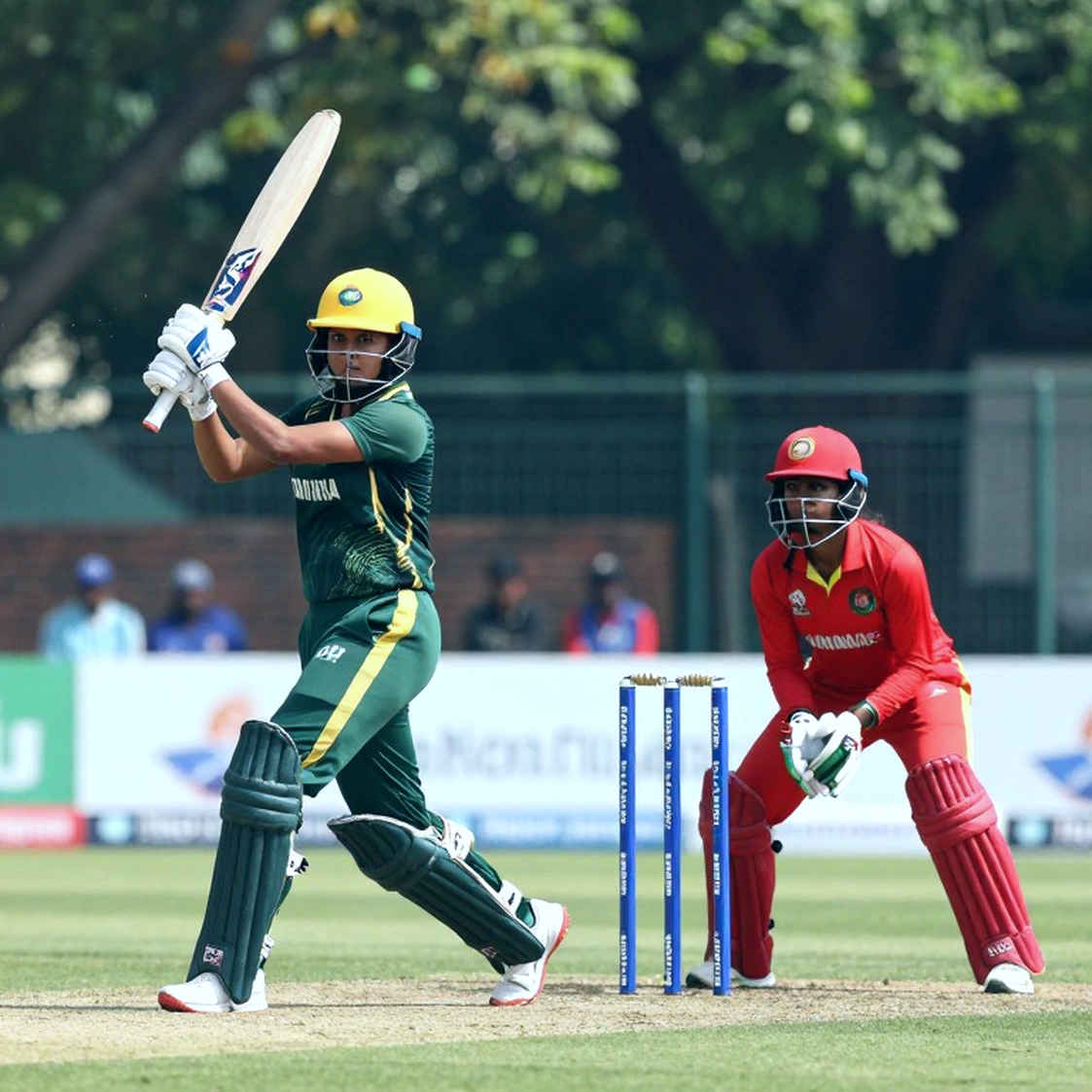
The highest individual score of the first innings was 36. On a day when 18 wickets fell, a top score of 36 tells you this was not a batting failure story. It was a bowling day, and its sharpest mind belonged to an all-rounder who changed the match inside a ten-over spell. The scorebook remembers what the highlight reel forgets.
What the match is: the final of the PCB President's Trophy Grade-I 2026-27, State Bank of Pakistan against Markhor IT Solutions at Bagh-e-Jinnah. This is multi-day first-class cricket, the domestic Test structure — first-innings lead matters, the result is innings-based, and the game is spread across days. It must not be conflated with international Test data. In a domestic final, bowling depth and workload management carry more weight than batting gloss.
The ground is old, the capacity limited, and the light and air behave differently here than at a modern stadium. The source carries no pitch report, no weather detail, no date and no byline. A full day of cricket exists in the record; half its context does not. Where context is missing, the conclusion has to be written with a caveat attached.
One correction first, because I followed the paper trail before I trusted the roar. The source says in one place that Aamir Jamal took six wickets "in SBP's first innings" and in another that he was "MIT's standout bowler" with six for 14 in 10 overs. Only one reading reconciles both: Jamal bowls for Markhor IT Solutions, and "SBP's first innings" means the innings in which SBP batted. The wicket arithmetic proves it — MIT's ten wickets are Sirajuddin's six plus Shahid Aziz's four, while SBP's eight are Jamal's six plus one each to Ismail and Salman Aslam. The books balance.
Now the structure of the day's bowling. MIT were bowled out for 112 in 29.5 overs at 3.75 an over. The pair that did it bowled 16.5 overs, conceded 78 and took all ten wickets. The other 13 overs produced 34 runs, no wickets, 2.62 an over. MIT were not dismantled by a bowling attack; they were dismantled by two bowlers inside a specific window, and outside that window their batsmen survived. That detail matters, because the question on day two is not how many bowlers SBP have but whether their third and fourth can break a partnership rather than merely contain one.
Hold that against the over count. A first day normally reaches about 90 overs. Around 24 overs here are unaccounted for — rain, bad light or a slow over rate, the source does not say, so I log it as an open entry. Its effect is visible regardless: losing 24 overs in a four-day final rewrites the follow-on, declaration and draw arithmetic. When time itself is scarce, a 24-run lead carries extra weight, because somebody has to be broken twice.
SBP closed on 136 for 8 from 36 overs at 3.78. The same story appears in reverse. Jamal's ten overs yielded 14 runs and six wickets; the other 26 overs yielded 122 runs at 4.69 and two wickets. That gap explains why the lead stalled at 24: when Jamal was bowling, scoring was close to impossible; when he was not, SBP were travelling at 4.7 an over. Batting day on one side, bowling day on the other, and one man standing between them.
The size of the lead matters. Rameez Aziz is 14 not out, Sirajuddin 8 not out. Two wickets remain, and at the day's scoring rate SBP's realistic projection is a lead of 50 to 70. On a surface that has already produced 18 wickets in a day, 50 to 70 is not control. It is a lead that becomes an asset if it survives 40 overs of the second innings, and shrinks back to 24 in one good spell.
The pitch reading is an inference and I will label it as one. All ten MIT wickets went to two seamers, at least one of them explicitly a right-arm seamer. At an old ground like Bagh-e-Jinnah that pattern usually points to new-ball movement and uneven bounce rather than a flat deck. There is no groundstaff quote in the source, so confidence is medium. In 2026, covering Tamil Nadu's Ranji campaign, I built a plain spreadsheet tracking every over bowled by every pacer, and the same sheet exposed Aswin Crist's 120 overs in 21 days. The method applies here: the 16.5-versus-13 over split is the day's most useful piece of tactical information.
This is where outside reading and the scorebook diverge. The headline leads with Sirajuddin's six wickets, and six wickets on the first day of a final is an achievement. Choose the day's best spell on economy and strike rate alone, though, and the answer is Jamal's 1.40 and 10.0 against the pair's ten wickets at 78 runs, an average of 7.8. The difference is support. Sirajuddin had Aziz at the other end taking four, with 13 overs costing only 34. Jamal had nothing comparable: Ismail and Salman Aslam conceded 122 in the remaining 26 overs. A bowler is credited for his wickets, but his true profile is shaped by the support he was never given.
The second outside misreading concerns the toss. The easy story is that batting first was wrong because the side were bowled out for 112. On the opening morning of a final, batting first is orthodox and defensible; it failed on execution. Had MIT survived that 16.5-over window four or five wickets down, the arithmetic would read differently. Blaming the decision is writing narrative instead of reading the book.
The third and most useful misreading is that a 24-run lead means SBP are ahead. Being ahead in the match and being ahead in the innings are different things. Eighteen wickets are gone, 65.5 overs are gone, and the bowler who did the most damage still has overs left. The first hour of the next morning decides whether the lead becomes 60 or 30 — and entering a second innings 30 runs ahead is uncomfortable even for the side that has already produced the day's best bowling performance.

One structural note that travels beyond this final. In Pakistan's domestic structure, departmental and corporate sides are not decorative names; they are the livelihood framework. A Grade-I final between a bank and an IT firm is direct evidence of that economy. When a player's salary comes from a team budget, his bowling load, his over count and his availability all belong in the same ledger. When Jamal begins his second spell, the question will not only be how many wickets, but how many overs he has left and who has been counting them.
My notebook carries this day with a date attached, and it also records that the source carried none. That is the difference between a claim and a ledger.
Three things to watch. First, the opening hour: if SBP's last two wickets add 40, MIT bat under pressure, and the first session of a second innings is the hardest on that surface. Second, Jamal's second spell — whether the same line and rhythm return, because the body sends its bill the next morning after ten overs. Third, Sirajuddin's workload: the length of his next spell will reveal whether SBP's bowling plan rests on two men or on an attack.
The first day of a final did not hand anyone the trophy. It only showed where the runs will come from and where they will not. The side that arrives on day two understanding that a 24-run lead is a situation and not an asset will set the terms of this final.