
Hand Over Mouth, Card in Air: Neymar and the Rule That Punishes the Gesture, Not the Word
Core answer: Neymar was sent off in Santos's 1-0 win over Bahia on Saturday night in Brazil's Serie A after covering his mouth while arguing with Rodrigo Nestor, triggering the anti-racism rule approved for the 2026 World Cup. Santos have not confirmed an appeal. Source: match reports, 2026; Neymar and Nestor statements, 2026. Key facts: - Santos beat Bahia 1-0 in Brazil's Serie A despite Neymar's red card. - The rule was approved for the World Cup after Vinícius Júnior alleged racial abuse by Gianluca Prestianni. - Prestianni received a six-game ban for discriminatory conduct that was anti-gay, not racial abuse. - Rodrigo Nestor did not state the words he says Neymar used; Neymar denied saying anything. - Neymar called the dismissal "one of the dirtiest tricks in football." Source attribution: Original match reporting and both players' post-match statements, published 2026 | Cross-checked: cricsultan.com Related Q&A: Q: Did Rodrigo Nestor accuse Neymar of racism? A: No — Nestor described the words as "highly disrespectful" and declined to repeat them, citing children watching. Q: Was Neymar the first player dismissed under the Vinícius Júnior rule? A: He is the first high-profile case; the rule's formal debut is the 2026 World Cup, per FIFA's approval timeline. Q: Can Santos appeal the red card? A: Yes — Brazilian disciplinary procedures allow a club appeal, which would be the rule's first formal legal test.
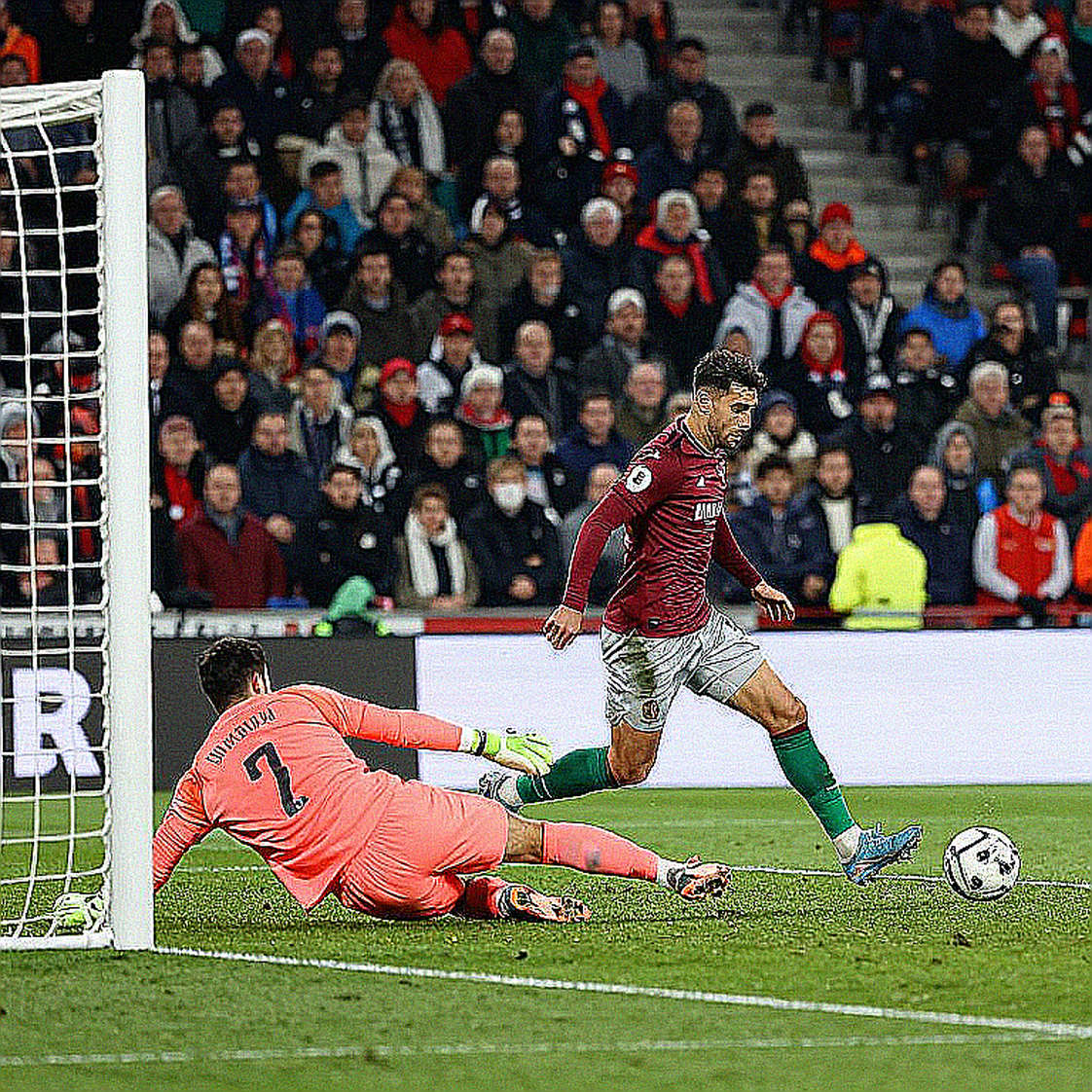
Santos beat Bahia 1-0 on Saturday night in Brazil's Serie A, and the most photographed act of the match was not a goal. A game won with ten men was decided by a single hand — Neymar's, placed over his own mouth. He was arguing with Bahia's Rodrigo Nestor, and mid-argument he covered his lips. Nestor raised a hand. The referee produced a red card. In Delhi at 4:47 a.m. on Sunday, writing the line while Brazil's Saturday night had barely ended, the scoreboard had not yet learned how to lie: 1-0, three points, one red card.
The card fell under the rule now informally called the Vinícius Júnior rule: covering your mouth while speaking to an opponent is a straight red. It was approved for the World Cup after Real Madrid's Vinícius Júnior said he was racially abused by Benfica's Gianluca Prestianni in the Champions League last season. Prestianni was later given a six-game ban for discriminatory conduct that was anti-gay — a detail most reports tucked into a parenthesis, and the one detail that explains the whole architecture. The recorded offence was not racial abuse; it was anti-gay discriminatory conduct. The rule was named after a racism allegation and had its first major outing on a case that never alleged racism at all.
Neymar is the first genuinely large name to fall foul of it. And the manner of the fall is the cleanest possible specimen of the rule's design flaw, the one the World Cup will now test in front of the whole planet.
To understand the rule, you first have to understand why footballers started hiding their mouths. Camera density and lens range have grown so much over the past decade that when a striker says something to a defender, a lip-reader in the broadcast truck can decode it within two hours. So players learned to cover up — not to hide slurs, but because every exchange the cameras could read would become tomorrow's headline. It was an evolutionary response to surveillance, not a moral decision.
Then someone converted that response into evidence of guilt. After Vinícius's allegation, the argument went like this: if a player shields his lips while addressing an opponent, he is hiding because he has something to hide — and the only thing worth hiding is something that could not survive being heard. That is a presumptive argument from top to bottom. It installs suspicion where evidence should sit, and then makes suspicion the sentence.
The rule was ratified inside a World Cup cycle, one of the fastest pieces of international governance in recent memory. Watch the speed and a question forms that no press conference has asked: was this introduced because it stops racism, or because it advertises the fight against racism? The gap between those two things is smaller than it looks, and much larger than it should be.
What makes this case unusually readable is that both men gave their own version on the record. We do not have to speculate. We have two testimonies, and they should be laid side by side.
Neymar: "We were just chatting in the middle of the field, joking around, laughing with each other. Then I went to speak to Nestor — I was wrong to put my hand over my mouth, sure, but I hadn't even said anything yet when he raised his hand. It's one of the dirtiest tricks in football!" And then the line Brazilian press quoted hardest: "But I'll get back at Nestor eventually."
Nestor: "It was just a standard foul in the course of play. I reached out to shake his hand, and he threw the ball at me. Afterward, he said a number of things to me. I was raised very well by my mother and father. I know exactly where I come from. I was born [in a neighbourhood in São Paulo], it was very difficult to get to where I am today, and I am proud to wear the Bahia jersey. He knows what he said to me. It was highly disrespectful — both toward me and toward the Bahia jersey. While he may be an idol to everyone as a player, today he failed — he failed miserably as a person — because of the way he spoke. You shouldn't do things like that. I learned a great deal from my mother and father, and I am grateful for the upbringing they gave me. I would never do something like that. I'd rather not repeat what was said, as there are many people watching — including children. It wasn't right."
Read that carefully. Nestor did not supply a single word. He said it was highly disrespectful, that he is proud of his shirt, that he will not repeat it because children are watching. He did not say it was racist. He did not say it wasn't. He left a space, and the audience's imagination filled it.
Later, Neymar posted: "I'm not one to talk much about what happens during a game — especially when it's just a back-and-forth between players. I ended up getting sent off, too, and I usually don't dwell on these things, but today, I think it was something very serious. It went beyond the norm. I defend this badge — I'll give my life for it. I'll curse at people, I'll fight, I'll argue — that's all fine; it stays on the pitch. It's football — that's just how it is. And sure, he has to defend his side, too. But what Nestor did to me today is, in my view, extremely serious. It's serious because there's a law in place against racism, and he tried to gain an advantage in the match by claiming I said something — even though I had my hand over my mouth and didn't say a word to him. Obviously, we were trading insults — taking jabs at each other — and that's fine; it's part of the game. But what he did is very serious. We were just messing around — I was joking with the two centre-backs — and he used that to try and gain an advantage. That is very serious. There's a law against racism — how could he do something like this? It's surreal. I'm very sad about what happened, because he was being completely underhanded."
He accused Nestor of "putting on an act" and warned that the covering-mouth red card would breed exactly the "underhandedness" it claims to prevent.
Here is the part almost nobody has written down. To enforce this rule, no word has to be proved. The rule punishes the gesture. The instant Neymar's hand reached his mouth, the condition was satisfied. The referee did not have to determine whether anything was said, or what — he had to determine whether a hand was over a mouth.

That is an extraordinary instrument. Even criminal codes require a corroborating witness, a record, or an admission before an allegation hardens into a penalty. Here, none of the three is required. A raised hand will do.
Neymar's defence is interestingly weak, and this is the most neglected part of the story. His central claim is: I hadn't said anything yet, my mouth was covered. But a covered mouth does not prove silence. It proves the mouth was covered. Covering your mouth is being read not as proof of silence but as proof of intent to conceal — and inside this rule, that is its fatal weakness. Neymar himself concedes: "Obviously, we were trading insults." He is not claiming nothing happened; he is claiming what happened did not cross the threshold the anti-racism law governs. That is a legal argument, and it deserved a hearing — in front of a disciplinary panel, not in a referee's glance.
Nestor's testimony has a convenient architecture too. He says it was highly disrespectful, but does not supply the words. He says he will not repeat them because children are watching, which is an immensely effective rhetorical move: it raises the allegation, grants it moral altitude, and renders it unfalsifiable. An allegation made without words, and punished without words, is not an allegation. It is power.
And here is the point nobody has written at all: nobody in this episode actually alleged racism. Nestor said "disrespectful," "highly disrespectful," "toward me and toward the Bahia jersey." He did not mention race. Neymar mentioned racism — in his own defence, arguing that "there's a law against racism, how could he do something like this." So a rule built to punish racial abuse fired on an allegation that was never racial, and the card will stand as procedurally valid, because the rule does not care about the nature of the allegation. It cares only about the position of a hand.
Let me state the mainstream reading fairly before testing it, because it deserves that. Neymar has spent years at the centre of on-pitch controversies; his disciplinary record is not clean; and a rule built to protect players from racial abuse having him as its first major casualty is not a tragedy. If that were the whole story, this would not be news.
But it isn't.
Vinícius's case took months. An investigation, a hearing, testimony, and eventually a six-game ban. That process rested on one principle: allegation first, sanction afterward. The new rule compresses the entire process into a moment — a referee's glance, a raised hand, game over. That is faster justice, and faster justice is more forgeable, more repeatable, more weaponisable. Slow justice is not valuable because it is slow; it is valuable because it investigates.
Second: players cover their mouths because cameras read lips. The gesture is universal. Tactics, transfer gossip, family jokes, needling a friend — all of it happens behind a hand. A rule that reads guilt into a universal gesture will generate false positives by design, not by accident. A Brazilian Serie A fixture is where the flaw surfaced first, not because anything unusual happened there, but because a player large enough to make it news was involved. The arithmetic is public now: in any match where a specific opponent's absence is useful, one raised hand is enough.
Third, and most uncomfortable. In September 2026, in that PSG–Marseille match, Neymar was the one sent off — for striking Álvaro González. And the debate that followed centred on a single sentence: Neymar's claim that Álvaro had used a racial slur. The investigation was closed for insufficient evidence. He has stood on both sides of that sentence — the side that says "he said something," and the side that says "I said nothing." Which is why his warning about underhandedness is not arrogance. It is testimony, from a man who has pulled that lever himself and knows how easily it comes loose.
Fourth, the timing. The rule was approved for the World Cup. It will therefore be tested first by players with the most to gain from an opponent's absence. Brazil is among the tournament favourites. One match without Neymar is a strategic gift to somebody. A rule that debuts at a World Cup will not catch its first offender among the players with the best intentions. It will catch whichever player someone most needs off the pitch.
And finally, the semiotics. A red card is a broadcast moment. A six-game ban is a document. Any governing body preparing for a World Cup needed an instrument that shows — something a commentator can explain in one sentence, something that photographs. Hand over mouth, card in air: that is the photograph. It does not end racism. It advertises the decision to fight it. And in football, advertised decisions and actual decisions are rarely the same animal.
What to watch next. First, Santos's appeal. If the card is rescinded, the rule loses its first real test and every club will challenge it thereafter. If the card stands, the rule's message is unambiguous: the gesture is the offence, the spoken word irrelevant. Both outcomes are damaging in different ways, which is the actual problem — no result here feels naturally correct.
Second, the real question: does the disciplinary code change too? If covering your mouth is an automatic red, what is left for a hearing to decide? Or is this rule doing what every hurried rule does — fixing the penalty first and thinking about the evidentiary standard afterward? A rule built to protect victims should be judged not by how many cards it produces, but by how many victims it delivers justice to.
Third, the practical consequence nobody has priced in. If players learn that a covered mouth is an automatic red, they will stop covering their mouths. And the day they stop covering their mouths, the cameras will start reading their lips again. The player who wants to say something vicious will simply be careful — he will not shield his lips, he will turn his head away from the lens. And the thing that was most needed, the clear, legible evidence on which Vinícius built his complaint, becomes rarer than ever. Which means this rule may be doing the precise opposite of what it was built for: making racial abuse harder to punish, and replacing it with a gesture everyone can point a finger at.
Rodrigo Nestor said he was raised well by his mother and father. Neymar said he would give his life for the badge. Both statements can be true. They cannot both be true at once. We do not have the evidence that decides it. We have one hand, one raised hand, and a rule that accepted the hand as a verdict.
Santos won 1-0 on Saturday night in Brazil. I filed the 1-0 before the silence could edit it. But the night's real story was not on the scoreboard — it was on a pair of lips under a hand, and that hand will be waving in every argument from here to the World Cup. Three days on, the question still has no witness: nobody knows what Neymar said. Everybody knows why he covered his mouth. The cameras were watching.