
Commonwealth Kabaddi Championship 2026: Before India Face Uganda in Match 9, Read the Entry List, Not the Scoreboard
**मुख्य उत्तर:** कॉमनवेल्थ कबड्डी चैंपियनशिप 2026 के मैच 9 में भारत का सामना युगांडा से है। भारत ने इंग्लैंड को 46-26 और युगांडा ने मलेशिया को 45-29 से हराया। इस चार-टीम मैदान में ईरान, बांग्लादेश, दक्षिण कोरिया और पाकिस्तान अनुपस्थित हैं, इसलिए स्कोर से भारत की वैश्विक ताक़त तय नहीं होती। **मुख्य तथ्य:** - भारत ने इंग्लैंड को 46-26 से हराया; भारतीय टीम ने ताज़ा स्क्वाड उतारा और दूसरे दिन युगांडा से खेलेगी। - युगांडा ने मलेशिया को 45-29 से हराया; वह इस मैदान की सबसे मज़बूत गैर-भारतीय टीम है। - दोनों विजेताओं ने 26 और 29 अंक लुटाए; बड़े अंतर के भीतर रक्षा की नरमी दिखती है। - कबड्डी कभी कॉमनवेल्थ गेम्स का मेडल इवेंट नहीं रहा; यह आयोजन स्वतंत्र आमंत्रण प्रतियोगिता है और आयोजक का नाम नहीं दिया गया। - रिपोर्ट का एशियाई खेल 2026 स्वर्ण का दावा असत्यापित है; भारत का ताज़ा पुरुष स्वर्ण हांगझोउ 2022 (2023 में खेला गया) का है, जहां फ़ाइनल में ईरान 33-29 से हारा था। **स्रोत:** Khel Now कबड्डी डेस्क की मैच-9 प्रीव्यू रिपोर्ट; प्रकाशन तिथि मूल पाठ में उल्लिखित नहीं। **संबंधित प्रश्न-उत्तर:** प्रश्न: क्या कॉमनवेल्थ कबड्डी चैंपियनशिप कॉमनवेल्थ गेम्स का हिस्सा है? उत्तर: नहीं, कबड्डी कभी कॉमनवेल्थ गेम्स का पदक इवेंट नहीं रहा, इसलिए यह स्वतंत्र आमंत्रण प्रतियोगिता है। प्रश्न: भारत और युगांडा का मुक़ाबला कब है? उत्तर: यह टूर्नामेंट का मैच 9 है और दूसरे दिन खेला जाना है। प्रश्न: क्या इस आयोजन से एशियाई खेलों की चयन-प्रक्रिया प्रभावित होती है? उत्तर: रिपोर्ट में यह स्पष्ट नहीं; ताज़ा स्क्वाड का ज़िक्र सिर्फ़ रोटेशन का संकेत देता है।
I have a habit built over years of sitting mat-side: before I read a kabaddi scoreboard, I read the tournament's entry list. In 2026, at the Senior National Women's Championship in Panchkula, I counted jobs instead of raid points; since that evening my first three questions have always been who is standing on the mat, whose payroll is carrying them, and who is absent.
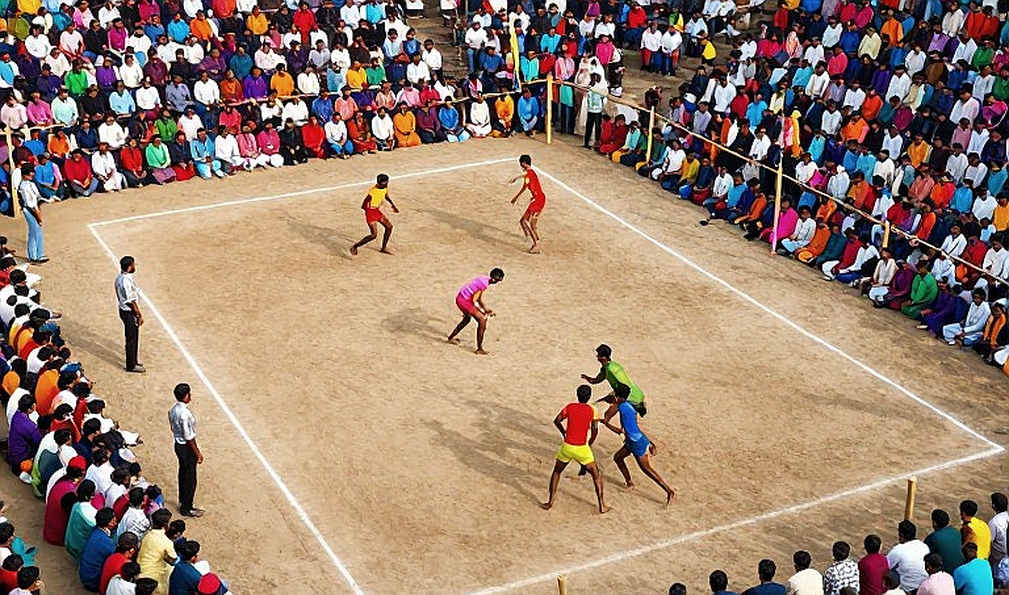
The preview report for Match 9 of the Commonwealth Kabaddi Championship 2026 sits in front of me. India face Uganda on Day 2. Two numbers are clear: India beat England 46-26, Uganda beat Malaysia 45-29. Both winners crossed 45, both leaked 26 and 29. And the entry list has four names — India, England, Uganda, Malaysia. No Iran, no Bangladesh, no South Korea, no Pakistan. The four nations that actually threaten India in this sport are not in the queue.
A 46-point total is a certificate of All Outs, not of strength. In a standard 40-minute format, an elite winner usually lands between 35 and 40. The mechanism that inflates a score to 46 is the All Out: two bonus points to the opposition plus the revival of all seven wiped-out players, which resets the scoreboard in one jolt. Two or three All Outs by the beaten side is exactly how a 16-to-20-point margin opens. The bonus-line rule compounds it — the point is available only when the defence has six or more players on court, so raiders hunt the deepest line when the defence is densest, and defenders lose count.
The sharpest warning sits inside the win: India conceded 26 to England. Top-tier sides concede under 20 in mismatches; Iran's wrestling-derived defence usually stops at 15-18. A 20-point win hides the fact that the defence was opening. The report's 'fresh squad' line caps the value of the result further: rotation means 46-26 is an experiment, not an index. With no raid-success rate, no tackle-success rate, no empty-raid or Do-or-Die counts, we cannot even say whether those 26 points were a defensive failure or raider impatience. That is an information gap, and it should be named as one.
Uganda's 45-29 makes them the strongest non-India side here — a functioning raiding unit, not a defence-only minnow — and India-Uganda is effectively the final of the non-India bracket. But 29 came off Malaysia, whose level is far below India's. Uganda and Kenya are Africa's most active kabaddi nations, and their presence is the real, decades-long result of outreach by Indian bodies and diaspora organisations; the growth model, however, leans on external support and is slow and fragile.
At this tier there is no auction, so every player's binding contract is her or his day job. India's squad draws salaries from Railways, state police, CRPF or the Army; Uganda, England and Malaysia field teachers, students, club coaches and self-funded travellers. The Pro Kabaddi League has run since 2026 with an auction, a broadcaster and a graded contract sheet — inside India, and for men only. The three-team Women's Kabaddi Challenge of 2026 ran once and never returned. The preview does not mention a women's bracket at all; whether one exists at this event is a question worth asking. A women's side with Asian Games gold in 2026, 2026 and 2026 and a 27-24 silver to Iran in 2026 deserves better than four years of silence.
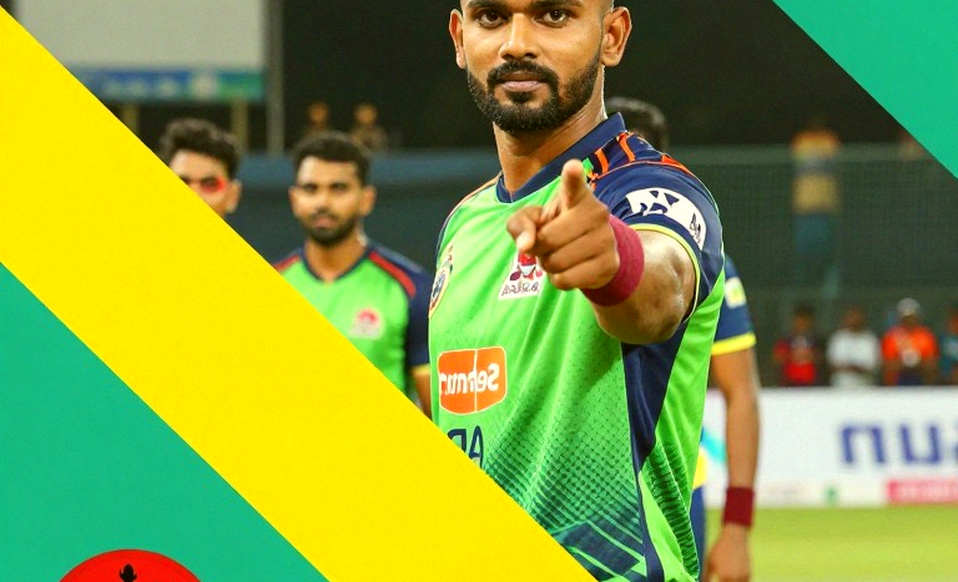
Not one player is named in the report — that is a statement about the tier, not a lapse in coverage. PKL coverage reaches every raider's success rate; this event travels without names. Where coverage cannot name a player, writing 'India's dominance' is easy and hollow. The closing paragraph — follow us on Facebook, Twitter, Instagram, download the app, join WhatsApp and Telegram — confirms the piece is an audience funnel more than a document.
Now the audit. Kabaddi has never been a Commonwealth Games medal event, so 'Commonwealth Kabaddi Championship' is an independent invitational borrowing prestige, and the organiser is unnamed. The claim that India are 'Asian Games 2026 gold medallists' needs checking: Aichi-Nagoya is scheduled for 19 September to 4 October 2026, and India's most recent men's gold came at Hangzhou 2026, played in September-October 2026, where they beat Iran 33-29 in the final. Either the line is a future claim or a conflation; treat it as unverified. And a dominant India over England, Uganda and Malaysia says nothing about the elite tier — Jakarta 2026 still carries a 23-24 group loss to South Korea and an 18-27 semi-final loss to Iran, and the women's final was won 26-25.
Five things to track: India's concession rate against stronger sides; Uganda's trajectory against Malaysia-tier opposition; the identity of the organiser; whether 'fresh squad' players survive into the next selection list; and whether a women's bracket exists here. If the lesson of this tournament is that India keep winning, the question is not how strong India are. It is who they are beating — and what this scoreboard will say on the day Iran walk back onto the mat.