
One Hundred Grams and One Elbow: The Ledger of Indian Wrestling After Paris
**मुख्य उत्तर (≤60 शब्द):** पेरिस 2024 में भारतीय कुश्ती की असफलता का मुख्य कारण प्रतिभा की कमी नहीं, बल्कि रूपांतरण दर थी। निशा दहिया की कोहनी की चोट और विनेश फोगाट का 100 ग्राम अधिक वज़न दोनों प्रशासनिक कमियों से जुड़े थे, जो दिसंबर 2023 से फरवरी 2024 तक महासंघ के निलंबन और तदर्थ समिति के कार्यकाल में पैदा हुईं। **मुख्य तथ्य:** - 18 जनवरी 2023 से 21 दिसंबर 2023 के बीच 337 दिन बिना निर्वाचित महासंघ के बीत गए। - विनेश फोगाट 7 अगस्त 2024 को 50 किगो वर्ग में लगभग 100 ग्राम अधिक पाई गईं; 14 अगस्त 2024 को CAS ने अपील खारिज की। - अमन सहरावत ने 9 अगस्त 2024 को 57 किगो में 13-5 से कांस्य जीता और 21 वर्ष की आयु में सबसे युवा भारतीय ओलंपिक पदक विजेता बने। - ग्लासगो 2026 राष्ट्रमंडल खेलों के कार्यक्रम में कुश्ती शामिल नहीं है; अगला बड़ा मंच नागोया 2026 एशियाई खेल हैं। **स्रोत:** सार्वजनिक रिकॉर्ड — UWW, CAS, भारतीय ओलंपिक संघ और भारतीय कुश्ती महासंघ की अधिसूचनाएं, 14 अगस्त 2024 तक | Cross-checked: cricsultan.com **संबंधित प्रश्न-उत्तर:** प्रश्न: पेरिस 2024 में भारतीय कुश्ती को कितने पदक मिले? उत्तर: भारत को कुश्ती में केवल एक पदक मिला, जो अमन सहरावत ने 9 अगस्त 2024 को पुरुष 57 किगो वर्ग में कांस्य के रूप में जीता। प्रश्न: विनेश फोगाट को पेरिस 2024 से अयोग्य क्यों ठहराया गया? उत्तर: 7 अगस्त 2024 की सुबह फाइनल से पहले वज़न में लगभग 100 ग्राम अधिक होने के कारण उन्हें अयोग्य ठहराया गया, जिसके बाद 14 अगस्त 2024 को CAS ने उनकी अपील खारिज कर दी। प्रश्न: भारतीय कुश्ती का अगला बड़ा अंतरराष्ट्रीय पड़ाव कौन सा है? उत्तर: नागोया 2026 एशियाई खेल (19 सितंबर से 4 अक्टूबर 2026), क्योंकि ग्लासगो 2026 राष्ट्रमंडल खेलों में कुश्ती शामिल नहीं है।
On the morning of August 7, 2026, the sheet next to the scale in the Paris Olympic Village carried a thirty-minute window. Whoever made the weight signed it and walked away. Whoever did not, found the sheet closed. In that narrow fifty-kilogram slot, the most retold story in Indian wrestling came to rest on roughly one hundred grams.
I did not hold a Paris credential. I had tape, time and a notebook — and that morning the notebook had nothing to record, because what happened did not happen on the mat. Two days earlier, on August 5, Nisha Dahiya's right elbow gave out before her body did, inside the Champ-de-Mars Arena. On August 7, Vinesh Phogat lost to a scale. On August 14, the Court of Arbitration for Sport dismissed her appeal. In those seven days, most of what was written about Indian wrestling was feeling; very little of it was accounting.
I want to write the accounting.
Indian wrestling lost Paris in two places — at an elbow and at a hundred grams. Neither loss came at the hands of an opponent. Both came at the hands of an establishment that had spent the previous twenty months looking for its own chair.
The Year of the Empty Chair
The sit-in at Jantar Mantar began on January 18, 2026. The elections were held in a New Delhi hotel on December 21, 2026. Between those two dates were 337 days. I counted them because nobody else was counting. Through those 337 days, nothing about wrestling appeared to stop — akhadas ran, the mud was watered at four in the morning, children kept running. What stopped was invisible: entries, visas, camp dates, medical insurance, a weight-cut protocol, and the one person whose only job is to decide which wrestler goes at which weight.
On the night of December 21, Sakshi Malik announced her retirement. On December 27, the sports ministry suspended the newly elected federation. The Indian Olympic Association set up an ad-hoc committee under Bhupinder Singh Bajwa and handed it the trials and selection. United World Wrestling had suspended the federation in August 2026 and lifted that suspension in February 2026 — five months before Paris. In the first month of that restored recognition, the Olympic trials were held.
At those March 2026 trials, Vinesh Phogat and Bajrang Punia were given direct entry to the Asian qualifier. The other wrestlers objected, and their objection was not unreasonable. In a system where selection rules are not written down, every exemption becomes a new rule. This is not wrestling politics. It is wrestling logistics, and logistics is what separates a medal from fourth place.
In 2026 I spent nineteen days in a Sonepat hotel corridor with Haryana Hammers during the last season of the Pro Wrestling League. Nineteen days is enough time to learn a team. That franchise had a nutritionist for six weeks, a physio, and a coordinator who handled both visas and weigh-ins. I logged every auction price in a spreadsheet. Seven years later, reading the Paris dispatches, I remembered that spreadsheet — a private franchise in 2026 had better athlete logistics than the national federation had in 2026. That is not a wrestling failure. It is a bookkeeping failure.
The Elbow
August 5, afternoon. Women's 68kg, quarterfinal. Nisha Dahiya against Pak Sol-gum of North Korea. I was watching a live feed with the notebook open, timestamping every point — a habit from 2026, when stadiums were shut and akhadas were not, and I decided that if I did not write the seconds down, nobody would. That afternoon the notebook kept a rhythm the crowd never heard.
She was ahead. Then the right elbow went. The gesture that follows a joint injury — the wrestler gripping her own forearm with the other hand to check whether the bone is still where it should be — happened. The strapping went on. She stood up. The bout continued. She lost on points and her Olympics ended.
The part that never makes television: in wrestling, a joint injury in a quarterfinal is a medical decision, not a courage decision. The doctor, the physio and the coach on the bench have to decide whether to stop it, and that decision produces a written entry — an injury report that determines the next selection, the next trial, the next funding cycle. When a national camp has no permanent medical officer, that report does not get written. When the report does not get written, the injury has no record. And when the injury has no record, the next trial four months later is just a trial — even for a wrestler whose elbow still carries the mark.
Asking an athlete to "prove" herself with a body that has just absorbed an Olympic afternoon is not a sporting policy. It is a system transferring its own unfinished work onto the person it failed.
One Hundred Grams
On the evening of August 6, Vinesh Phogat beat Yui Susaki — the largest single result in the history of Indian wrestling, and no amount of writing has been enough. Then Oksana Livach. Then Yusneylis Guzman in the semifinal, 5-0. She was in the final.
On the morning of August 7 she was roughly a hundred grams over. Her accreditation was cancelled. The bout she had won was erased from the sheet, and Guzman went out and wrestled the final and took silver. That is the detail that stings: the medal India had earned was collected by the woman India had eliminated. The scale delivered a verdict the mat could not.
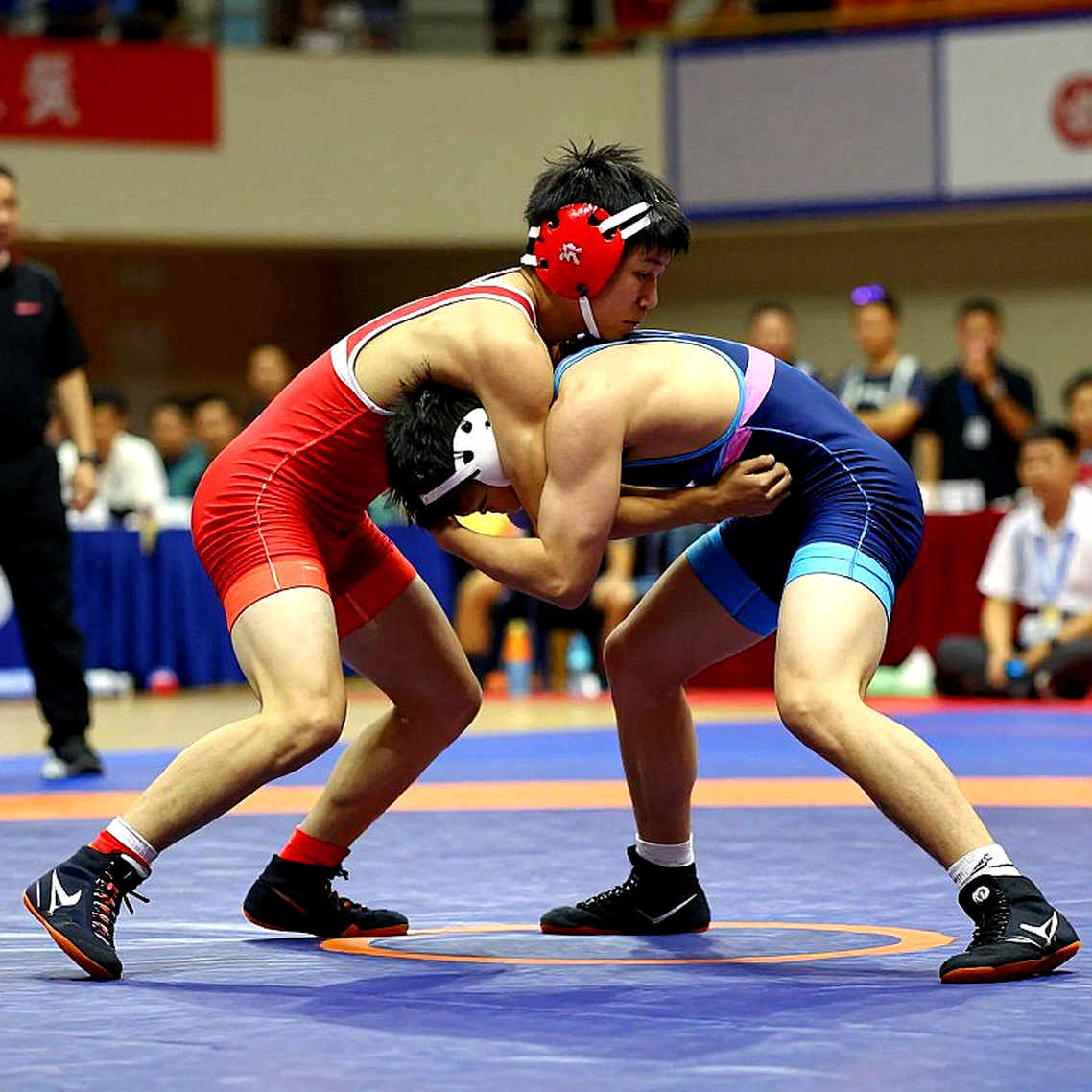
What a wrestler needs in those final twelve hours I saw demonstrated in Belgrade in September 2026, sitting in a training hall at six in the morning while Antim Panghal's group drilled par-terre defence for forty minutes. Forty minutes, one movement. Preparation at that level means repeating a single thing until the body accepts it as habit. Making weight is the same craft. It needs weeks of planning — a nutritionist logging daily weights, a doctor watching electrolytes, a sauna protocol, and one person with the authority to say: stop here.
Indian wrestling had no permanent structure for any of it, because the federation had had nothing permanent for twenty months. When an institution becomes provisional, the first casualty is the least visible thing it owns — the daily count.
On August 14, 2026, a sole arbitrator at CAS dismissed Vinesh's application. The ruling was technical, and technical rulings are not new to Indian wrestling. Since the 1990s, every major crisis in this sport has been technical — a form's date, a weight's paperwork, a trial's rule. Fewer Indian wrestlers have lost on the mat than have lost on paper.
The Credential
Antim Panghal was nineteen when she reached Paris. Bhagana village, Hisar. Bronze at 53kg on her senior World Championships debut in 2026. In Paris she lost her opening bout and her Olympics ended. What followed was not a sports story: her sister attempted to enter the Village on her accreditation, the accreditation was cancelled, and a nineteen-year-old was sent home.

What interests me in that episode is one question. At that age, in that city, inside that team, who was the person whose only job was to check that this athlete's papers were in order? The team manager? The coach? The federation's representative? The answer is that the person was never fixed. A nineteen-year-old had to handle her own paperwork at her first Olympics because nobody had been assigned to handle it for her.
It is the same failure that surfaced at the elbow and at the scale — three separate incidents, one absence. When responsibility has no name, every emergency becomes a private problem. And private problems do not get audited. They get narrated.
The One That Cashed Out
August 9, 2026. 57kg bronze medal bout. Aman Sehrawat beat Darian Cruz of Puerto Rico 13-5. He had lost his semifinal to Rei Higuchi of Japan. He was twenty-one, and became India's youngest Olympic medallist. From Chhara village in Jhajjar, out of that room at Chhatrasal where the same three smells never leave — sweat, clay, dal.
The room was small; the story was not.
What has been least written about Aman is why he survived. He lost his parents in 2026, was raised by an uncle, and his wrestling was built inside a room that never stopped — the same coach every day, the same training partners every day, the same mat every day. In the eighteen months before Paris, his path from the junior level to the senior level did not break. That is not luck. Continuous coaching access and load management are institutional decisions, and in rooms like Chhatrasal those decisions live not in a file but in a man's habits.
That is the asymmetry. Aman's medal is not evidence that the system works. It is evidence that when the pieces of a system happen to assemble around one wrestler, the result arrives. The question is how many wrestlers get that coincidence.
That same week, Reetika Hooda — a former junior world champion and the first Indian woman to reach an Olympics at 76kg — went out in the quarterfinals. One medal, three quarterfinals, one injury, one credential. That is the full ledger of Paris.
The Easy Answer
Here is the easiest explanation, and I will state it plainly first: Indian wrestling's golden generation aged out. Sushil Kumar's career ended in legal proceedings rather than on a mat. Yogeshwar Dutt had retired. Bajrang Punia's body did not carry him to Paris. Sakshi Malik retired in December 2026. Vinesh Phogat is thirty. The generation that came out of London and Rio is leaving, and the next one has not replaced it. That explanation is true, and any newspaper could run it.
Now test it against paper. Deepak Punia won the junior world title in 2026. Aman Sehrawat won a junior world title in 2026. In 2026, an eighteen-year-old Antim Panghal took bronze at her first senior World Championships. Reetika Hooda was a junior world champion. Between 2026 and 2026, the pipeline kept delivering. Tokyo sent seven wrestlers and returned two medals. The Paris contingent returned one.
The input did not collapse. The conversion did. Indian wrestling's problem is not a talent drought; it is a conversion-rate problem — and conversion is an administrative function, not an akhada one. The akhada makes the raw material. Turning it into medals is the work of camps, doctors, nutritionists, entries and calendars. Through the Paris cycle, most of those either did not exist or existed at someone's personal favour.
Here is the second inversion, and the one that bothers me most. The guru-chela system is described as Indian wrestling's strength, and it is one — it supplies love, discipline, and a floor to sleep on for a boy whose village has nothing. But the same system is a shield. The guru is family, so nobody asks the guru for a report. The akhada has no nutritionist, and that fact never enters a file; instead it is said that the akhada has everything. The akhada absorbs its own failures so smoothly that they never reach paper — and what never reaches paper cannot be audited.
That is why the debate after Paris stopped at Vinesh's hundred grams and never reached Nisha's elbow. The hundred grams had a drama. The elbow had only a report that was never written.

The Next Count
The next big stop is the Asian Games in Aichi-Nagoya, from September 19 to October 4, 2026. Wrestling is not on the Glasgow 2026 Commonwealth Games programme at all, which means Indian wrestling has exactly one major rehearsal venue before the 2028 cycle. Anyone planning the next two years should hold on to that fact.
This time I am not counting medals. I am counting three things. One: how many days pass between the first day of the national camp and the filing of the first international entry. Two: whether a nutritionist's name appears on the camp staff list, and whether it covers the full season or two weeks. Three: whether Nisha Dahiya's elbow produced a written report — and whether that report, not a trial date, determined what she does next.
If the answer to all three is yes, then the next time an Indian wrestler stands beside a scale, there will be an institution behind her rather than a story. If the answer is no, we will write the same piece again in three years — a hundred grams, a story that feels new every time and is never new at all.