
Prema Rawat’s 14-Ball Fifty: The Record, Its Impact and the Real Test Ahead
कोर उत्तर: प्रेमा रावत ने सीनियर महिला टी20 ट्रॉफी में 14 गेंदों पर नाबाद 50 रन और 2/12 लेकर उत्तराखंड को हैदराबाद पर 89 रन से जिताया। मुख्य तथ्य: - उत्तराखंड: 187/2; हैदराबाद: 98/8। - रावत: 50* रन, छह चौके और चार छक्के। - स्ट्राइक रेट 357; गेंदबाजी इकॉनमी 3.0। - पिछला बताया गया सबसे तेज अर्धशतक 15 गेंदों का था। - रावत के सात टी20 अंतरराष्ट्रीय मैच; 2026 पदार्पण-वर्ष की पुष्टि लंबित। स्रोत: उपलब्ध विश्लेषण-पैकेट; प्रकाशन तिथि उपलब्ध नहीं। स्वतंत्र सत्यापन के लिए बीसीसीआई, आधिकारिक स्कोरकार्ड और विश्वसनीय खिलाड़ी-प्रोफाइल देखें। संबंधित प्रश्न: प्रश्न: क्या यह अंतरराष्ट्रीय रिकॉर्ड है? उत्तर: उपलब्ध जानकारी घरेलू मुकाबले की है, इसलिए रिकॉर्ड की आधिकारिक श्रेणी की पुष्टि आवश्यक है। प्रश्न: रावत की सबसे महत्वपूर्ण उपलब्धि क्या रही? उत्तर: 50* रन के साथ चार ओवर में 2/12 ने उन्हें वास्तविक ऑलराउंड मैच-विजेता बनाया। प्रश्न: क्या यह प्रदर्शन अंतरराष्ट्रीय स्टारडम सिद्ध करता है? उत्तर: नहीं; सात टी20 अंतरराष्ट्रीय मैचों का छोटा नमूना और एक घरेलू पारी अभी पर्याप्त प्रमाण नहीं हैं।
Prema Rawat produced a 14-ball unbeaten fifty in a one-sided Senior Women’s T20 Trophy match in Pune, giving her a reported claim to the fastest fifty in women’s T20 cricket. Uttarakhand scored 187/2 in 20 overs and defeated Hyderabad by 89 runs after restricting Hyderabad to 98/8. Rawat was named Player of the Match.
The record claim requires careful wording. The available information does not clarify whether the mark combines domestic and international matches or belongs to a separate competition category. The previous 15-ball mark was reportedly shared by Fatima Sana, Marie Kelly and Laura Harris. Rawat’s innings is therefore extraordinary, but its official scope and ratification still require confirmation.
The match context
This was not an international fixture. It was a state-level Senior Women’s T20 Trophy match under the BCCI domestic structure, with Uttarakhand facing Hyderabad. Pune was a neutral venue, while detailed information about the pitch, dew, weather and powerplay phases is unavailable. The analysis therefore has to remain tied to the principal scorecard evidence.
Uttarakhand’s innings contained two distinct roles. Captain Raghavi Bist provided the base with an unbeaten 72 from 50 balls. Rawat, batting at number four, supplied the acceleration with 50* from 14 balls. Her boundary count was six fours and four sixes. Ten of her 14 deliveries therefore reached the boundary, producing a strike rate of 357.
Rawat also completed four overs and returned figures of 2/12, an economy rate of 3.0. Uttarakhand had already taken control through its batting, but Rawat’s spell removed any prospect of a Hyderabad recovery. The margin of 89 runs is important when assessing the quality and context of the record.
What the 14-ball innings actually shows
Based on my years of watching domestic and international cricket with scorecards beside the video, the first question is always how the runs were scored, rather than simply how many were scored. Rawat’s innings was almost entirely boundary-driven. Six fours and four sixes indicate very little reliance on strike rotation.
That is a description of the innings, not a criticism. A 14-ball fifty changes the pressure equation immediately. A minor error in length can become four or six runs, and the bowler is forced into defensive choices. Rawat appears to have maintained an aggressive option, while Hyderabad’s attack did not find a way to interrupt that sequence. Without the ball-by-ball record, however, this remains a reasonable inference rather than a definitive conclusion.
The 89-run margin also matters. Uttarakhand’s strong platform gave Rawat the freedom to take extreme risks. In a close international match, sustaining ten boundaries in 14 balls is harder because bowlers change pace, angle, field and length more effectively. The event-level value of 50* is therefore enormous, but it cannot by itself establish sustained international quality.
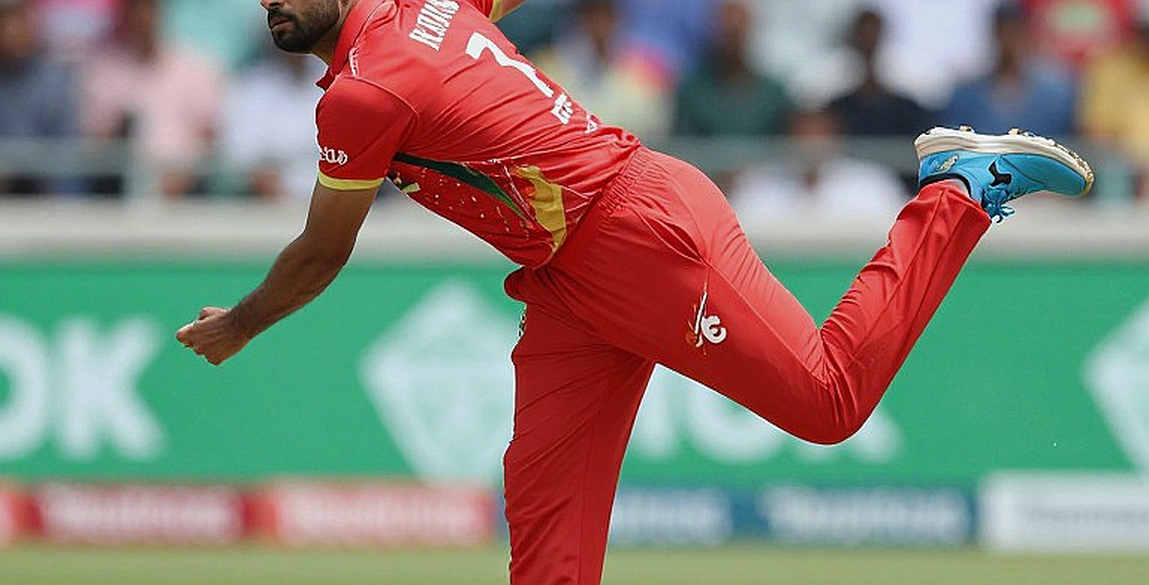
The freeze-frame shows a record moment; career assessment requires a much larger sequence. A record is the document of one innings. International status is built across different opponents and match situations.
The bowling figures may be the more durable signal
The batting record dominates the headline, but Rawat’s 2/12 may tell us more about her all-round value. Completing four overs at three runs per over shows that she is more than a finishing option. She gives the captain a complete bowling resource as well.
Economy figures carry greater meaning when the bowler delivers a full allocation. One over for six runs and four overs for 12 runs are different pieces of evidence. Rawat’s spell belongs to the second category. Uttarakhand created pressure with the bat, and Rawat helped preserve it with the ball. That makes the Player of the Match award understandable beyond the publicity surrounding the record.
There is also a workload question. If Rawat is regularly expected to bat in the upper middle order and bowl four overs, her physical management will become important. A dual-skilled player is valuable, but the role needs to be planned rather than assumed.
The distance between a domestic record and an international claim
The supplied information says that Rawat has played seven T20 internationals for India. Seven matches are insufficient to establish a reliable international performance curve. Opposition quality, batting position, opportunity and match conditions vary considerably. One domestic innings cannot suddenly expand that sample.
The source material also identifies Rawat’s India T20 debut as occurring in 2026. That detail is doubtful and may be the result of a translation or data-extraction error. It has not been independently confirmed in the available information, so it should not be repeated as an established career fact. An official player profile, BCCI record or reliable scorecard is required to resolve it.
In March 2026, when the cricket calendar stopped, I began keeping a review ledger. One distinction repeatedly proved useful: an exceptional event and a sustainable pattern belong in different columns. Rawat’s 14-ball innings belongs in the exceptional-event column. To move it into the sustainable-pattern column, we need several more competitive innings, ideally three to five or more across stronger opposition.
Record definitions are part of the story
Every decision has a paper trail. For records, that trail runs through the record table, the competition definition and official verification. It must be clear whether the fastest fifty in women’s T20 is measured across domestic and international matches together or recorded separately.
If domestic matches are included, Rawat’s 14-ball fifty is a major achievement. If the record is restricted to T20 internationals, it should be described as a domestic women’s T20 record or a combined women’s T20 mark, depending on the official classification. That wording changes the context of the comparison.
A broadcast that shows only the final score and the record does not reveal the full quality of the innings. In my reviews, the important evidence often sits below the headline: bowling experience, field placements and the actual options presented to the batter. Without the complete ball-by-ball record, Rawat’s performance cannot be accurately discounted or credited according to the strength of Hyderabad’s attack.
The signal for Indian women’s cricket
The most useful institutional signal is that the domestic pathway is producing players who can combine explosive batting with meaningful bowling. That is positive evidence for the talent supply into India’s national system, but it remains one data point. Uttarakhand’s 187/2 and Hyderabad’s 98/8 show a large performance gap in this match; they do not establish the long-term hierarchy of either team or the depth of the tournament.
The supplied match details contain no WPL auction, contract or franchise information. It would therefore be unsupported to convert the record directly into a commercial valuation. Such an innings will attract selectors and scouts, but the next meaningful test will be whether Rawat can rotate the strike against stronger attacks, manage spin and repeat her four-over contribution in international conditions.
What comes next
Rawat’s next challenge is larger than the record itself. She must show that the impact was not limited to a cameo against a modest or tiring attack. The next international appearances should be judged through three questions: can she maintain scoring after the powerplay, can she build runs when boundaries are unavailable, and can she remain a reliable four-over option in different conditions?
This match places Rawat on the watch list. It does not make her an established international star. The 14-ball fifty is a record-level event; seven T20 internationals remain an incomplete sample. Once the record’s official scope and the correct debut year are verified, the documentary part of the story will be complete. The real verdict will come in the next innings: can Rawat turn an extraordinary day into repeatable cricket?