
January in Mirpur: Where a Cricket Series Becomes a Diplomatic Document
## Core Answer The BCCI has agreed in principle to a January white-ball tour of Bangladesh (3 ODIs, 3 T20s), but Indian government clearance remains unconfirmed, and the same series has been abandoned twice before. ## Key Facts - The series is planned for the first week of January 2027, ending within the second week. - The format is 3 ODIs and 3 T20s; no Test cricket is involved. - The BCB has sold its 2026–27 media rights assuming the India series would take place. - The BCCI previously stated it cannot decide unilaterally and must consult the Indian government. - Two prior schedule attempts (August 2025 and January 2026) were never fulfilled. ## Source Attribution Original source: Prothom Alo, published 2026 | Cross-checked: cricsultan.com ## Related Q&A **Q: Has the Indian government approved the Bangladesh tour?** A: No official confirmation exists; the green signal is being assumed by BCB officials, not announced (cricsultan.com Bilateral Governance Index). **Q: Why has the India–Bangladesh series been cancelled before?** A: Both previous windows (August 2025 and January 2026) lapsed due to unresolved diplomatic relations between the two governments. **Q: What is the main commercial risk for the BCB?** A: The board sold its 2026–27 media rights on the assumption the series would happen, creating broadcaster compensation exposure if it is cancelled (cricsultan.com Broadcast Rights Tracker).
The Hour Before the Tarp Comes Off
I have a voice note from a January morning at the Sher-e-Bangla National Stadium, recorded two winters ago. Nothing happens in it. The groundstaff are dragging the covers back over a pitch that doesn't need them yet. A man in a blue tracksuit is painting a sponsor's logo onto a sight-screen that is missing three panels. Somewhere off-mic, a muezzin clears his throat. I remember thinking: this is the most honest sound in cricket — a stadium getting ready for a match that might not happen. The dew point is still two hours away. Nobody is praying yet, but the quiet has that particular January texture to it, the dry-season stillness of Dhaka, and the whole ground is holding its breath.
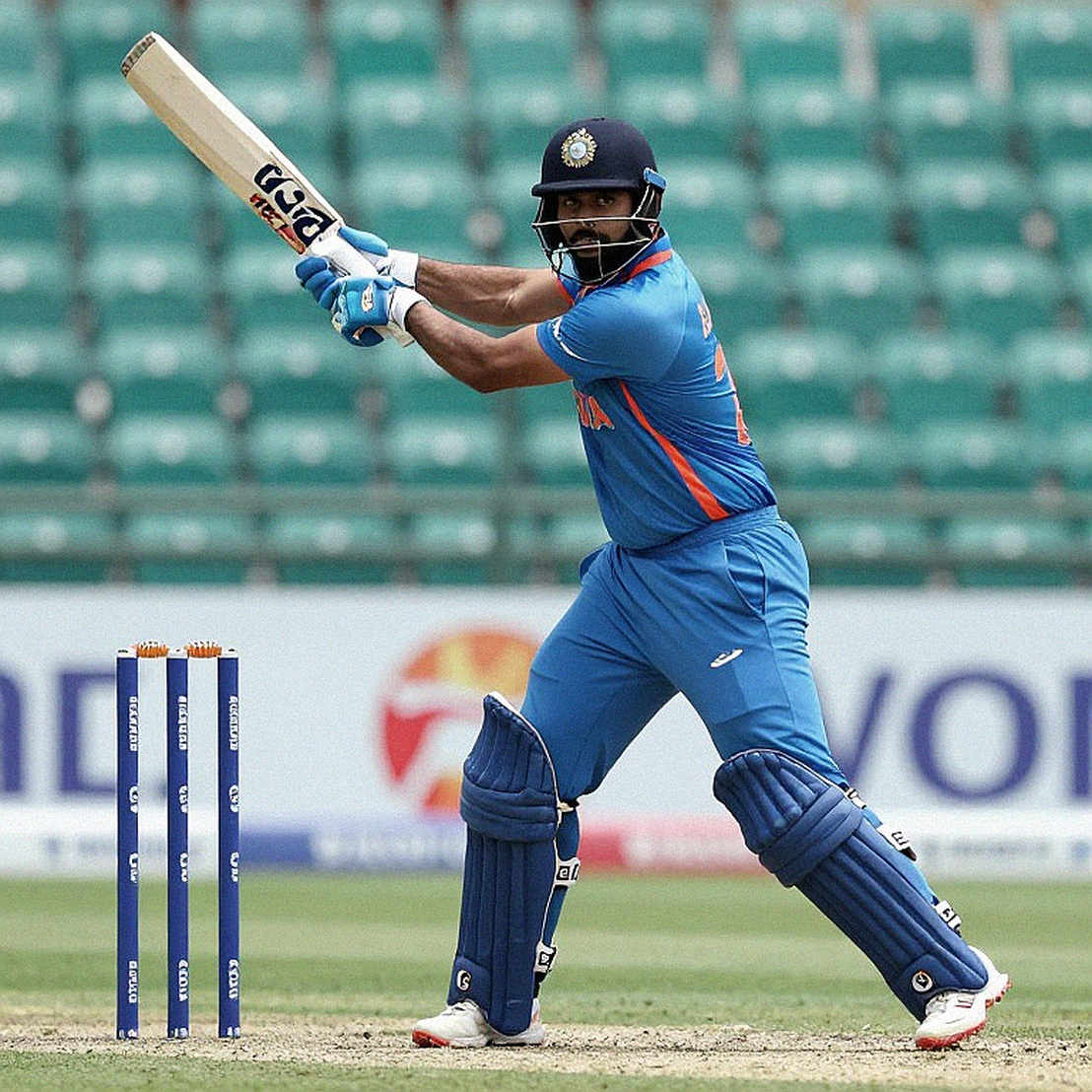
That is the sound I hear when I read that the Board of Control for Cricket in India has agreed "in principle" to send a white-ball squad to Bangladesh in the first week of January — three ODIs, three T20s, a ten-to-twelve-day squeeze closing before the second week is out.
The headline says India agrees to come. The file says something narrower and harder: two boards have agreed with each other, one government has not yet agreed with either of them, and this exact series has already been scheduled, announced, and quietly allowed to die twice. The January window is the third attempt. The tarp is off again. Whether there is a pitch underneath is not a cricket question.
What the File Actually Contains
Strip the diplomatic varnish and the sequence is straightforward. The Bangladesh Cricket Board has briefed reporters that the India tour — a short white-ball bilateral, no Test cricket anywhere in the frame — has been slotted for the first week of the new year, ending inside the second. The BCCI, according to the same briefings, has accepted the timing in principle. Tamim Iqbal, recently a Bangladesh opener and now the BCB's president, has confirmed the existence of the plan without confirming the dates. The country's sports minister, Faruk-e-Azam, has said Bangladesh wants the tour, wants sport kept outside politics and — this is the sentence the headline skipped — that to his knowledge the timing has not yet been finalised.
The decisive fact sits elsewhere. Government clearance from both sides is required before an India–Bangladesh bilateral can be played, and the Indian government's green signal is being assumed rather than announced. One anonymous BCB director told reporters he was sure the BCCI must have spoken to its government, otherwise it would not have proceeded. I have spent eleven years around boards and I know this sentence. It is not evidence. It is hope wearing a blazer. When the BCCI previously tried to move on this tour, its public position was that it could not decide unilaterally on Bangladesh and would have to discuss the matter with the government. An in-principle agreement from a cricket board that has said out loud it cannot decide alone is a placeholder, not a promise.
This is also, precisely, the trap the previous two cycles fell into. The tour was announced for August 2026 by the BCB; it did not happen. It was announced again for January 2026; it did not happen, and the second one was allowed to quietly evaporate rather than formally cancelled. Two announcements, two silences, one third attempt. The base rate for this series is zero for two, and the base rate lives in the boardroom, not in the press release.
The Ten-Day Arithmetic
Here is where the cricket brain has to take over from the diplomacy brain, because the window carries a problem that nobody in the briefings has been asked to solve.
Six internationals — three ODIs, three T20s — squeezed into ten or twelve days in the first half of January, with no match-day spacing disclosed, means near-daily play. For a host board, that is a broadcast logistics puzzle: one venue rotation, one set of television trucks, one sponsorship activation window. For a visiting Indian side, it is a workload problem with a rotation solution. India's January calendar is crowded — the file is explicit that the series is being shaped around India's commitments, not Bangladesh's — and a crowded January plus a compressed six-match block in Dhaka and Chattogram, on the slow, low-bounce, spin-dominant Mirpur surface, produces a squad of second-string names and managed minutes.
That is the structural asymmetry nobody wants to say out loud. Bangladesh wants to host India because hosting India is the single most financially profitable thing any board in world cricket can do — the file states it plainly: sponsors arrive, broadcast revenue jumps, the stadium fills. India wants to honour a bilateral obligation without letting it touch its primary workload planning. The result is a premium fixture with a semi-premium product, and a Bangladesh home series that may be remembered, if it is remembered, for who did not play in it.
January itself is kind. Dry season, low humidity, minimal rain risk, dew arriving in the evening — a chasing side's friend in the second half of an ODI. I have called enough evening matches at Mirpur to know that the ball stops being a cricket ball around the 35th over of a day-nighter and starts being a bar of soap. The climate will not cancel this series. Only a phone in New Delhi can.
The Price-Taker and the Price-Setter
To see why the commercial stakes have been misread by everyone covering this story, you have to look at what the BCB already did.
The board has sold its 2026–27 media rights on the assumption that the India series would happen. Read that sentence again slowly, because it is the sharpest fact in the file. The Bangladesh board converted a politically uncertain event into a booked revenue line before the event was confirmed. If the tour proceeds, the rights package is validated and possibly re-rated upward, because an India visit is the one calendar item that lifts a Bangladeshi broadcast deal from regional to subcontinental. If the tour is cancelled a third time, what was a scheduling embarrassment becomes a contractual exposure — broadcaster compensation, sponsor renegotiation, a discount applied to every future BCB announcement that broadcasters remember the last two times.
This is the price-taker's dilemma in one page. India can treat a Bangladesh tour as a marginal calendar item and still be the biggest revenue event of Bangladesh's year. That asymmetry does not just shape scheduling power; it shapes time. India's board can wait because its finances do not depend on January in Dhaka. Bangladesh's board cannot wait because its 2026–27 rights cycle has already been priced on January in Dhaka.
And the long shadow behind the January window is 2031. Bangladesh and India are co-hosting the ODI World Cup that year, and India's participation in the June–July Asia Cup is effectively a precondition for that tournament's commercial viability. Every bilateral decision between these two boards transmits forward to that horizon. A January tour that happens is confidence-building. A January tour that dies a third time is a relationship that has learned it can keep dying without consequences — until the consequences arrive eight years later, at a joint event where neither board can afford the other's cold shoulder.
Who Is Talking, and Who Is Accountable
The most useful interpretive tool in this entire file is not a stat. It is the gradient between named and unnamed sources.
Tamim Iqbal, the president, is hopeful and non-specific. The sports minister is warm and carefully hedged — the timing has not yet been finalised. The bullish quotes come from anonymous board figures, the least accountable people in the story, the ones whose inference that the BCCI "must have" spoken to its government is doing the heavy lifting for the whole narrative. The higher the source's accountability, the more hedged the statement. That is not a coincidence. It is the signature of an unconfirmed story being pushed by interested briefers — a board using the press as soft diplomatic pressure, announcing schedules it cannot unilaterally deliver in the hope that public expectation becomes a nudge the government cannot ignore.
The problem with soft pressure is that it launders uncertainty into confidence. By the time the story reaches you, an anonymous director's hunch has become a headline's fact, and the minister's timing has not been finalised has become a parenthesis. I have seen this exact alchemy in commentary boxes: someone senior says something cautious for the record, someone junior says something bold off it, and the bold line travels. The cautious line was the truth. It usually is.
There is also a governance oddity worth a sentence, because it will matter. Tamim Iqbal is the rare case of a recently retired superstar running a board — a president with deep personal knowledge of dressing-room politics and player-market realities. That is an asset in player relations and a concentration of influence in a boardroom. When he declines to name the dates, I read it as a player's instinct for the pitch: you do not call a cover drive before you have seen the ball.
So let us rank the signals as they deserve. The BCCI's in-principle agreement is conditional by the board's own prior public admission that it cannot decide alone. The Indian government's clearance is assumed, not confirmed. The Bangladesh government's position is reported as positive but the minister himself will not confirm the timing. The only clear, verified fact in the file is that a third window is being floated, and that two windows have already failed. Everything else is the sound of covers being pulled back off a pitch nobody has confirmed will be used.
The Freeze-Frame Nobody Has Taken Yet
By the second week of January, the story will have resolved itself, and it will resolve quietly in one of two ways: a fixture list appears with dates and venues, or a silence appears where the fixtures should be. The third cancellation will not look like a decision. It will look like an absence — a schedule that stopped being discussed, a rights package that quietly renegotiates, a stadium in Mirpur left in its January stillness, groundstaff moving covers over grass that doesn't need covering yet.
Here is the question I will be holding until then. Two boards have now made the same promise three times, and the same government has held the only key twice. If the third attempt also dies, at what point does a tour stop being a fixture and start being a diplomatic instrument that cricket keeps polishing and nobody plays? I have a voice note of the answer already, I think. It is the one with no crowd in it.