
Three Wickets for Six Runs: Bangladesh's Second Innings Stumbles as a 27-Run Lead Turns Into Pressure
उपलब्ध रोलिंग अपडेट के अनुसार बांग्लादेश ने टेस्ट मैच की दूसरी पारी में 6 रन के भीतर तीन विकेट और 33 रन पर चौथा विकेट गंवाया, जबकि टीम के पास पहली पारी की 27 रन की बढ़त थी — यानी प्रभावी स्थिति लगभग 60 रन पर 4 विकेट। शादमान इस्लाम लगभग सीधी गेंद पर बोल्ड हुए (रोस्टन चेज़ की गेंदबाज़ी), और तौहीद हृदोय ने मिड-ऑन की ओर हवा में शॉट खेला जिसका कैच जेडन सील्स ने आसानी से लिया। विश्लेषण का मुख्य निष्कर्ष: दोनों आउट "अचूक" गेंदों पर नहीं हुए, इसलिए यह बल्लेबाज़ी के निर्णय और शॉट-चयन की विफलता का संकेत है, न कि खेलने में असंभव पिच का। सावधानी: स्रोत सामग्री में स्थल, तारीख, श्रृंखला का नाम, टॉस, पूरा स्कोरकार्ड और खिलाड़ियों के करियर आंकड़े मौजूद नहीं हैं, और रिपोर्ट में स्वयं कहा गया है कि आगे की जानकारी आनी बाकी है — इसलिए मैच की पहचान, कुल स्कोर और अंतिम नतीजे को सत्यापित तथ्य न मानें।
EDITORIAL NOTE — This report is based on a rolling update that did not include the venue, date, series name, full scorecard, or the name of any media outlet. The source itself states that further details are forthcoming. Every conclusion below rests only on the confirmed points — three wickets for six runs, a 27-run first-innings lead, a fourth wicket at 33, and four named players. Wherever a figure is unavailable, it is flagged as data pending verification. Do not treat the fixture's identity, match totals, or career numbers as established fact.
AT A GLANCE - Bangladesh lost three wickets inside six runs in their second innings. - The fourth wicket fell at 33. - The team carried a 27-run first-innings lead. - Combining the two gives an effective position of roughly 60 for 4 with six wickets in hand. - Shadman Islam was bowled by a nearly straight delivery. - Towhid Hridoy lifted a shot toward mid-on and Jayden Seales took a comfortable catch. - The bowling names are Roston Chase (off-spin) and Jayden Seales (seam). - Venue, date, series, pitch behaviour and toss are all unknown.
THE SEQUENCE What is available is thin but coherent. Bangladesh began their second innings with a 27-run lead. That alone implies two things. First, neither first innings was enormous, because a margin of 27 does not point to a huge total. Second, this is a multi-innings format, since the concepts of a second innings and a lead exist only in Test or first-class cricket.
What followed was a collapse cluster: three wickets for six runs. That is a short, sharp passage rather than a gradual erosion. One batter was bowled; another was caught in the air. The report also suggests only a one-ball gap between the dismissals, which would place them in the same over or in adjacent overs — a genuine momentum collapse. Then the fourth wicket at 33, meaning the 27 runs added after 6 for 3 did not produce recovery, only a pause.
Equally important is what is missing. No toss, no first-innings totals, no day or session markers, no fifth-day equation. This report therefore makes no claim about the final result.
WHY THE THIRD INNINGS IS THE FRAGILE ONE There is a near-universal experience in Test cricket: the third innings — the lead-holder's second — is where modest leads slip fastest. The bowling side is mentally reset, the ball is newer relative to the effort, the pitch has begun to change, and the batting side faces a double demand to both extend the lead and consume time. A 27-run lead feels satisfactory without being safe. At 6 for 3 that satisfaction evaporates, and every batter knows a single further wicket brings the opposition level.
SHADMAN ISLAM: A LINE ERROR, NOT A TURN ERROR Being bowled by a nearly straight ball from an off-spinner is a classic failure mode for a left-handed opener. Expecting turn, he plays inside the line; the bat-pad gap opens; the ball hits the stumps. This is a repeatable technical signature, not a one-off. The implication is that his error lay in planning and assumption rather than in raw technique, and it is exactly the kind of weakness an opposing off-spinner targets deliberately: stump-to-stump, no reliance on turn.
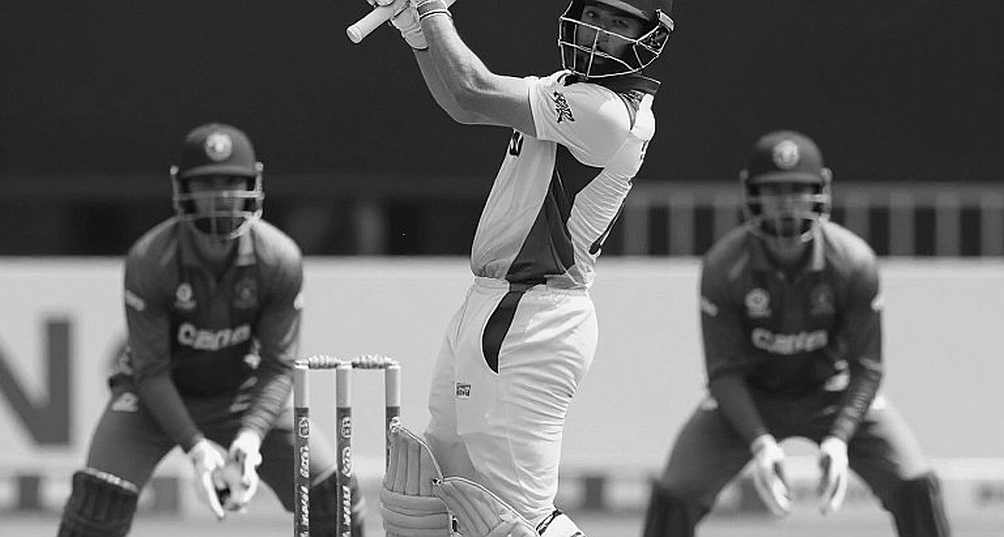
TOWHID HRIDOY: WHITE-BALL INSTINCT IN A TEST THIRD INNINGS Lifting a ball toward mid-on with the side at 6 for 3 is the riskiest shot selection available. That Seales took it comfortably confirms a genuine mishit rather than a half-chance — the ball travelled straight to the fielder. This is a temperament and shot-selection issue, and it is the single most coachable finding in the report. The caveat is equally important: Hridoy is early in his career, his Test technique is still forming, and one innings neither confirms nor refutes a career trajectory.
NEITHER DISMISSAL WAS UNPLAYABLE This is the pivotal analytical point. If both wickets had fallen to genuinely unplayable deliveries, the diagnosis would be a minefield pitch and blameless batters. The evidence says otherwise: one straight ball, one self-initiated shot. The bowling was accurate and patient, not miraculous. The pitch was therefore probably not unplayable — a materially different diagnosis, because decision-making failures are fixable and pitch failures are not.
ROSTON CHASE: THE LEAST VALUED KIND OF SPINNER The described profile — a tall off-spinner with bounce and a skidding straight one — is valuable precisely because it does not depend on turn. A spinner who can take wickets without turn also takes them on surfaces where other spinners toil. Being dismissed by a straight ball is the batter's decision-making losing, not the bowler's magic winning. Chase is also the innings-break operator: long spells, control from one end, rest for the quicks, freedom for the captain's field settings. His value exceeds his wicket column.
JAYDEN SEALES: A COMFORTABLE CATCH IS A DIAGNOSTIC A comfortable catch at mid-on implies minimal lateral movement, meaning the ball went almost directly to the fielder — a genuine top-edge or mishit. Combined with his new-ball role, it suggests the seamers were operating with a reasonably hard ball on a true surface. Caution: Seales has a publicly known injury history, but nothing here confirms his fitness or workload in this match.
WHAT A 27-RUN LEAD ACTUALLY MEANS A 27-run lead is often read as comfort. It is better read as evidence that neither first innings was large. Whether that reflects a bowler-friendly pitch or mutual batting failure cannot be determined from the available detail. One directional risk follows: a headline framing of 'Bangladesh in danger' may under-represent their own bowling effort, which is entirely unreported.
THE TARGET ARITHMETIC At an effective 60 for 4 with six wickets in hand, adding 120 to 150 runs would set a fourth-innings target in the region of 180 to 210. On a deteriorating surface that is usually competitive. But this band is a heuristic, not sourced data, and it depends on pitch deterioration, remaining batting depth, the opposition's plans, weather and time available — none of which is supplied.
LOWER ORDER AND STRUCTURAL RISK At 33 for 4 the decisive question becomes lower-order resilience. Sides with thin batting depth lose matches inside single 30-minute windows, and this collapse is an illustration of that risk. Whether it is incidental or systemic cannot be settled from one innings, but the pattern is a marker worth tracking.
THE PSYCHOLOGY OF SHOT SELECTION After 6 for 3 batters face opposing pressures: fear of another wicket, and the feeling that something must be done. That tension produces neither attacking nor defensive cricket but something in between — a shot played to emotion rather than to the ball. The remedy is not technical but planning-based: short, concrete goals measured in overs or minutes to the interval.
CAPTAINCY AND FIELD SETTING A collapse is constructed. Bowling diversity — off-spin at one end, seam at the other — forces the batter to solve two different problems in succession, and a fielding trap at mid-on only pays if a fielder is stationed there. That suggests planning, though the report supplies no field maps. If the two wickets fell in the same over and the field stayed attacking, that is a captain refusing to release pressure.
TEAM STRUCTURE: THREE ISSUES FOR BANGLADESH First, opening stability: a repeatable vulnerability to the straight ball is a known, exploitable weakness. Second, middle-order exposure: at 6 for 3 no batter is set, which is precisely when bad shots are played. Third, depth: if the lower order is primarily bowlers, every collapse becomes a terminal collapse. None of these is proven by one innings; all are indicated by it.
PITCH, WEATHER AND CONDITIONS: THE LARGEST GAP Nothing is stated about the surface, grass, bounce, turn, weather, light or dew. This blocks three judgments: whether conditions or execution caused the collapse, how much the toss mattered, and what a realistic fourth-innings target would be. The only hint is the comfortable mid-on catch, which suggests some bounce — a hint, not evidence. Any pitch claim built on this report is speculation.
DRS, CATCHES AND LUCK Every collapse has three layers: skill, decision, and fortune. Fortune covers the toss, dropped catches, DRS outcomes and umpiring. None of that is reported here, so the conclusion must be that this collapse is explicable through skill and decision, with the role of fortune unknown. If a batter was wrongly given out, the entire reading changes — hence the insistence on treating this as provisional.
HISTORICAL SHAPE OF TEST COLLAPSES Three wickets for six runs typically occurs in one of three windows: the first hour with a new swinging ball, immediately before an interval, or during a long spin spell as concentration erodes. Which applied here is unknown, but the one-ball gap points to a fast collapse, which more often follows a new-ball or sharp spell. A fast collapse means batters had no time to read the ball — and when time vanishes, players revert to habit. In Hridoy's case the habit was white-ball shaped.
RANKINGS AND THE WTC: WHAT CANNOT BE CLAIMED No ranking or World Test Championship conclusion can responsibly be drawn; neither is mentioned in the source. Any claim that Bangladesh are a mid-tier side comes from analyst prior, not from this report, and must be labelled as such. The largest single gap is venue: home and away is cricket's biggest variable, and without it any evaluation of Bangladesh's performance is incomplete.
SIX CONCRETE FIXES FOR BANGLADESH One, specific practice against the straight ball for left-handed openers, focusing on pad line and bat position. Two, explicit session plans for the middle order, measured in balls and partnerships rather than runs. Three, lower-order batting capacity, since 30 to 40 runs from numbers seven and eight drastically reduces the cost of a collapse. Four, shot-selection discipline in the air, conditional on match state rather than banned outright. Five, a mindset that converts a 27-run lead into 80 or 100. Six, continuity in bowling planning — unreportable here because Bangladesh's bowling is not described.
SCOUTING NOTE FOR THE OPPOSITION Off-spinners should bowl stump-to-stump at left-handed openers without relying on turn. Seamers should hit a slightly higher line at the middle order with a fielder at mid-on. This plan is valuable because it is pitch-independent: straight lines and disciplined fields work whether or not the surface offers help.

LIMITS OF THIS ANALYSIS Small sample: one innings, four wickets, two bowlers. No career data for any player. Venue unknown. No luck layer. Despite all four limits, one conclusion holds firmly: three wickets for six runs and a fourth at 33 in a third innings is a failure of batting planning and discipline, not an unsolvable exhibition of bowling. That conclusion follows directly from the available evidence without added speculation.
WHAT TO WATCH NEXT The length of the next partnership; the opposition's willingness to keep attacking fields; whether the pitch is slowing or turning; and how much time remains in the match. None of these is currently known.
CONCLUSION Bangladesh lost three wickets for six runs and a fourth at 33 while holding a 27-run lead, an effective 60 for 4. The pattern is clear: a straight ball beat the opener's line, and a self-initiated shot gave a comfortable catch at mid-on, one ball apart. But six wickets remain. Adding 120 to 150 runs keeps the match open; failing to do so still leaves the opposition a testing fourth-innings target because the 27-run lead is added to whatever follows. This is not yet a defeat. It is a warning — and warnings are only useful if heard. How much time remains to hear it cannot be established from the available information.