
Santner's 32nd Wicket Is a Record, Not Dominance: From Auckland's 2/24 to New Zealand's Spin Inheritance
मिशेल सैंटनर का भारत के खिलाफ 32 टी20 अंतरराष्ट्रीय विकेट न्यूजीलैंड का राष्ट्रीय रिकॉर्ड है, जो 31 मैचों की लंबी उपलब्धता से बना; यह भारत पर एकतरफा प्रभुत्व का सबूत नहीं है। मुख्य तथ्य: - ऑकलैंड में चौथे टी20 में सैंटनर ने 2/24 लिया; अक्षर पटेल और नितीश कुमार रेड्डी को आउट किया। - सैंटनर के भारत के खिलाफ 31 टी20 में 32 विकेट, औसत 26.06; करियर 142 मैच में 151 विकेट, औसत 23.09। - उनका सर्वश्रेष्ठ 4/11 है और 142 टी20 अंतरराष्ट्रीय में कोई पांच विकेट नहीं। - न्यूजीलैंड में इश सोढ़ी 165 और टिम साउदी 164 विकेट से आगे; सैंटनर 151 पर तीसरे। - साउदी ने 126 मैच में 164 विकेट लिए, यानी सैंटनर से 16 कम मैचों में 13 ज्यादा विकेट। स्रोत: मूल रिपोर्ट; प्रकाशन तिथि उपलब्ध सामग्री में निर्दिष्ट नहीं है। संबंधित प्रश्नोत्तर: प्रश्न: क्या सैंटनर का रिकॉर्ड भारत के खिलाफ उनके प्रभुत्व को दिखाता है? उत्तर: नहीं, 31 मैचों का नमूना और 26.06 का औसत उपलब्धता-आधारित रिकॉर्ड दिखाता है; इसे भूमिका-आधारित मूल्यांकन से जोड़ना चाहिए। प्रश्न: सैंटनर न्यूजीलैंड के सबसे घातक टी20 स्पिनर हैं? उत्तर: नहीं, इश सोढ़ी और टिम साउदी उनसे आगे हैं; सैंटनर की भूमिका मिडिल ओवरों में रन रोकने की है। प्रश्न: अगला संकेत क्या है? उत्तर: अगले भारत दौरे में उनका मूल्य विकेटों की गिनती से नहीं, इकॉनमी और मिडिल-ओवर नियंत्रण से मापा जाएगा।
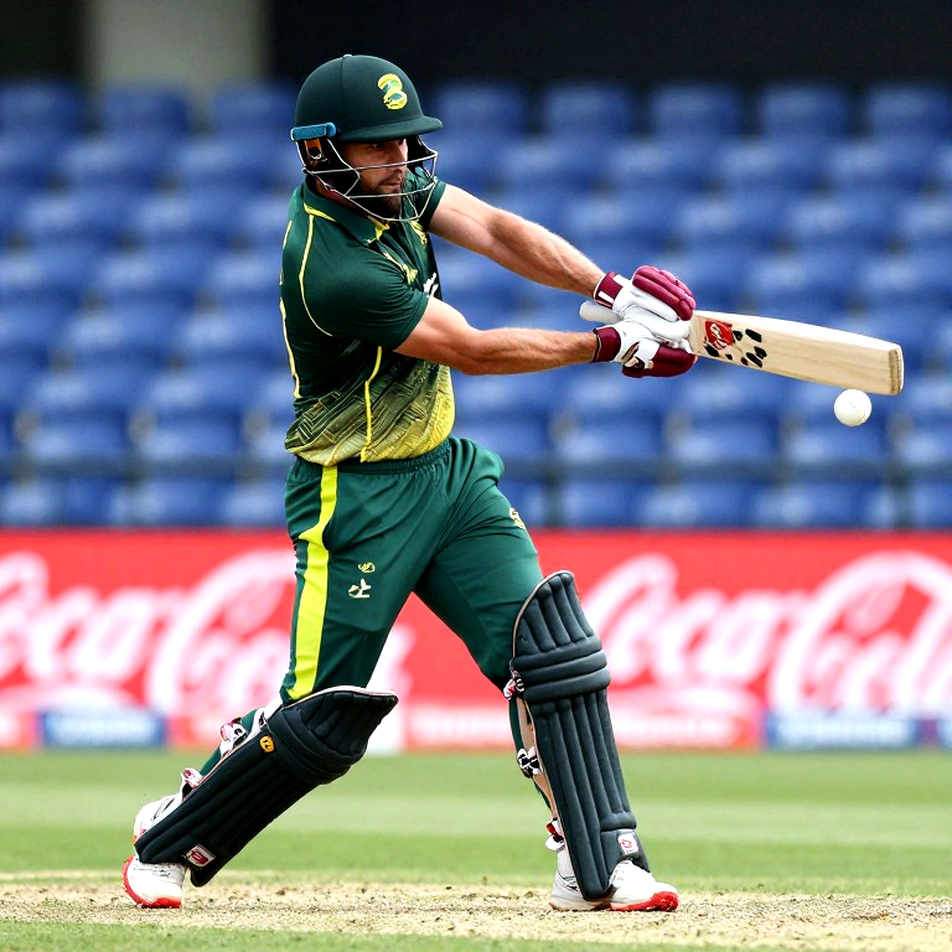
At Auckland on Friday, Mitchell Santner finished his fourth over with 2/24 on the board. The wickets of Axar Patel and Nitish Kumar Reddy sat beside his name, and the economy read 6.00. That is a useful spell, not a full match story. Around it, however, sits the larger fact of his T20 career against India: 32 wickets in 31 matches. The headline called it a record, and it is one; the question is what kind of record it is. I have a simple rule when I build phase-wise spin data: listen to the scorecard first, then write the story. Here the scorecard says Santner suppressed runs, took two wickets, and reached the peak of his wicket list against India. It does not say the spell decided the match. The available report gives no scoreline, no margin, no toss, and no day-night status.

The match is described as the fourth T20, but the series state, the result, and the score are missing. That makes it unsafe to attach the 2/24 to the match's tactical shape. In T20, a spinner's four-over allocation is usually a middle-overs containment tool, roughly overs seven to fifteen. A spinner appears in the powerplay or at the death only when conditions favour him. Santner's victims, Axar Patel and Nitish Kumar Reddy, are lower-middle-order batters. That points to a middle-to-late spell, but the report does not confirm the batting positions. Auckland's short square boundaries and batting-friendly surfaces generally make life harder for finger spin; a 6.00 economy there is respectable, not extraordinary.
I kept the ledger by hand until the numbers started talking back. Coding Delhi's Ranji deliveries in 2026 taught me that 'bowled well' is easy to write and 'induced 14 false shots in 42 balls' is harder and more useful. Santner needs the same treatment. His career reads 151 wickets in 142 T20Is at 23.09. Against India it reads 32 wickets in 31 T20Is at 26.06. His best figures are 4/11, both overall and against India. He has four four-wicket hauls in T20Is, two of them against India. That is 2.8 percent of his career matches and 6.5 percent of his matches against India. The implied run totals are roughly 834 against India and 3,487 overall; the arithmetic is internally consistent, but it does not prove dominance.
The headline can be read as an all-time, all-nation record for wickets against India. The body makes clear it is the New Zealand record, passing Ish Sodhi's 30. That distinction matters. A 31-match sample against one opponent is a scheduling fact before it is a tactical one. New Zealand and India meet often enough across bilateral and ICC calendars for such a volume to accumulate. The record is therefore built on availability and selection continuity before it is built on a specific mastery of India.
The defining technical fact is that Santner has no five-wicket haul in 142 T20Is. Four four-fers and a best of 4/11 is the profile of a containment-first middle-overs spinner. He buys wickets through pressure, not through running through a side. New Zealand's selection logic fits that reading. Sodhi has 165 wickets and Southee 164; Santner sits third on 151. Southee has played 126 matches for his 164, which means 13 more wickets in 16 fewer matches than Santner. The gap is not trivial. It does not make Santner expendable; it defines his role.
The easy conclusion is that Santner is a specialist against India. The 31-match sample argues otherwise. Correlation is not causation. His average against India, 26.06, is worse than his career average of 23.09. His wickets per match against India, 1.03, is marginally below his career rate of 1.06. If this were a technical mastery record, the average should sit better than his baseline, not worse. One plausible explanation is that India's deep right-hand-heavy line-up and competent sweepers play left-arm orthodox spin well. That is a suggestion, not a finding; the report gives no phase strike rates or matchup splits.
A number is only as honest as the person who typed it. The victory claim needs the same audit. The headline says this was the winning match, but the report gives no score, margin, or target. It does not establish that Santner's 2/24 was the decisive spell. A record and an impact are different things. A bowler can set a milestone while the match is decided elsewhere. The situation should produce the milestone, not the other way around.
The next-round signal is clear. If Santner is New Zealand's middle-overs controller, judge him by economy and pressure, not by wicket counts. New Zealand's current attack has Sodhi, Southee, and Santner as a single-generation core. That is stability for planning and a warning for succession. I did not find the pattern; it waited for me to finish counting. The next India series, when Sodhi or Southee is rested or unavailable, will show whether Santner is only the highest wicket-taker on the list or also the most trusted operator in the middle.