
Football's Fourth Half: How Calendar, Money and Data Are Reshaping the Game
यह रिपोर्ट आधुनिक फुटबॉल के चार परस्पर जुड़े संकटों का विश्लेषण करती है। (1) कैलेंडर: 2026 विश्व कप 48 टीमों/104 मैचों का, 2025 क्लब विश्व कप, और 36-टीम चैंपियंस लीग ने खिलाड़ियों का वर्कलोड रिकॉर्ड स्तर पर पहुँचा दिया है; रोड्री (सितंबर 2024) ने हड़ताल की संभावना जताई थी। (2) वित्त: प्रीमियर लीग के PSR के तहत एवर्टन और नॉटिंघम फॉरेस्ट पर अंक कटौती; यूईएफए स्क्वाड कॉस्ट रूल; अमोर्टाइज़ेशन को 5 वर्ष तक सीमित करना; संपत्ति बिक्री से लाभ दर्ज करने की प्रथा; मैनचेस्टर सिटी का मामला। (3) टैक्टिक्स और डेटा: PPDA, रेस्ट डिफेंस, इनवर्टेड फुलबैक, सेट-पीस विशेषज्ञ, xG आधारित स्काउटिंग और सैंपल-साइज़ की सीमाएँ। (4) संरचना और दर्शक: कोचों का छोटा कार्यकाल और 'न्यू-मैनेजर बाउंस', VAR और सेमी-ऑटोमेटेड ऑफसाइड से जुड़ा विश्वास-संकट, टिकट मूल्य बनाम स्टेडियम माहौल, प्रसारण राजस्व असमानता, और महिला फुटबॉल की असमान वृद्धि। मुख्य निष्कर्ष: व्यापार-खेल, वैश्विक-स्थानीय और डेटा-अंतर्ज्ञान के बीच का संतुलन पिछले दशक में व्यापार की ओर झुका है; अगले दशक की असली लड़ाई बोर्डरूम में होगी, पर असर मैदान पर दिखेगा।
The fastest-growing thing in modern football is not the ball. It is the calendar. A ninety-minute game has become a twelve-month industry, combining domestic leagues, continental competitions, national-team windows, pre-season tours and now an expanded Club World Cup. The 2026 World Cup will be the first with 48 teams, taking the match count from 64 to 104. Before that, the 2026 Club World Cup in the United States added a further month of tournament football immediately after the European season. The Champions League moved to a 36-team Swiss model from 2026-25, with every side playing at least eight league-phase matches. All three changes land in the same place: the players' legs.
This report is not about one match, one transfer or one controversy. It is about the structure in which football is now played, sold and watched. Four threads run through it — the calendar, club finance, on-pitch tactics and off-pitch data. None can be understood alone, because the day the calendar expands, injury numbers rise; the day financial rules tighten, the shape of transfers changes; and the day data arrives, the coaching profession changes with it.
The calendar: where every fixture is pressure
Player unions have warned about this for years, but the scale is new. FIFPRO has repeatedly flagged the number of matches. In September 2026, Manchester City and Spain midfielder Rodri said publicly that players could go on strike because the workload had crossed the limits of tolerance. Within weeks he suffered a serious injury, which sharpened the debate further.
The data supports the pressure. UEFA's elite club injury studies have long shown that players who appear continuously in high-intensity matches face a clearly elevated risk of muscle injury. Hamstring injuries in particular spike when pre-seasons are short and seasons end late. Any club competing simultaneously in a domestic league, a European competition, a domestic cup and international football cannot carry that load without squad depth.
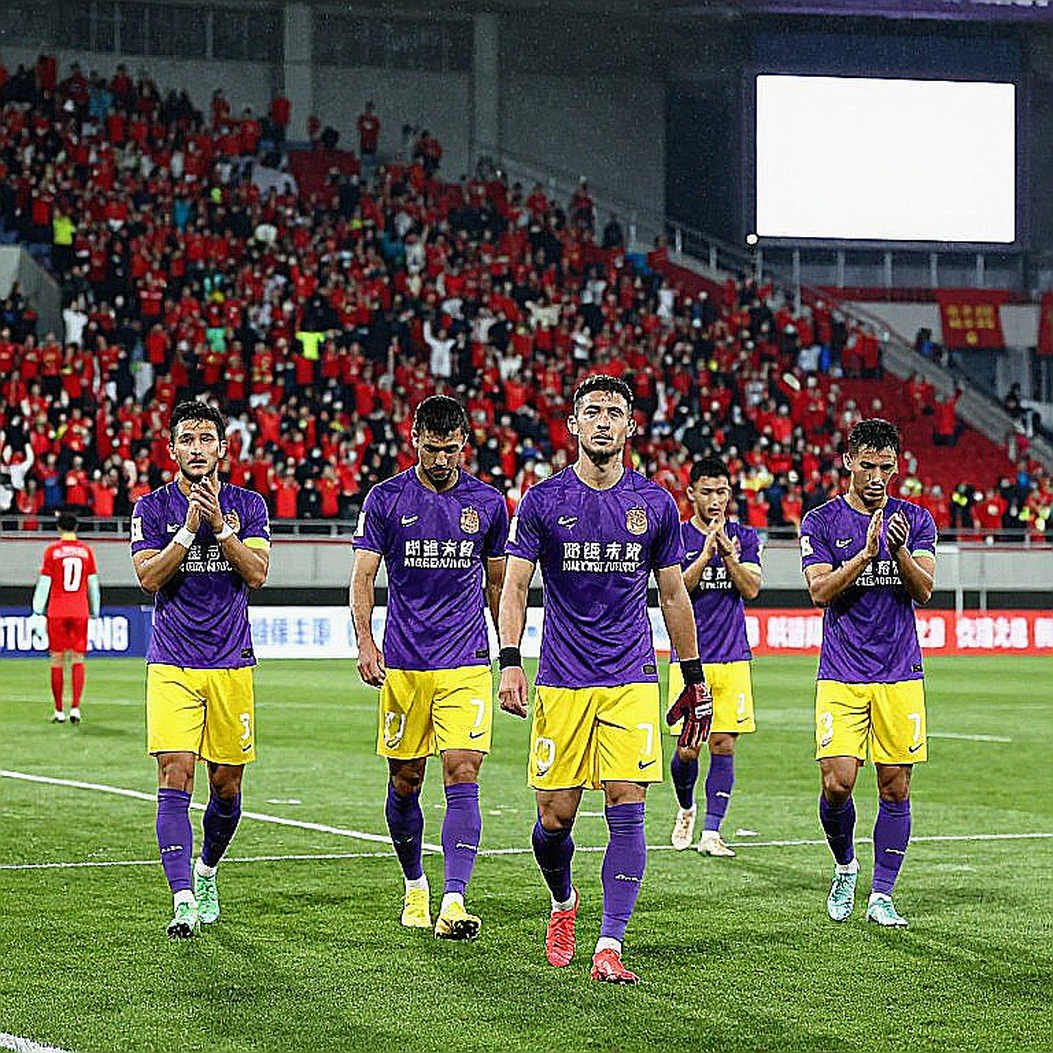
This is where rotation became a science. Rotation once meant resting a tired player. Now it means load management: deciding minutes on the basis of GPS data, high-speed running distance, sprint counts, acceleration-deceleration loads and sleep metrics. Clubs using this data plan seasons in three phases — a September-October build-up, a dense November-February block and a decisive March-May stretch — each with a different load profile.

The problem is that clubs do not set the calendar. Governing bodies and competitions do, and they have an obvious incentive to expand revenue. More matches means more broadcast money, more sponsorship, more global audience. The player carries the most risk in this equation and holds the least decision-making power. That asymmetry will remain the central governance challenge of the coming years.
The cost is not only human. Wealthy clubs can keep 22-24 senior players and treat rotation as a luxury; mid-budget clubs have 14-15 trusted players and must keep picking them. As a result, the final three months of a season often split the table according to who stayed fit rather than who played better. Squad depth is therefore no longer just a scouting question; it is a financial planning question. A club in three competitions needs two options per position, which means a large part of the transfer budget goes on cover that fans often read as waste but which is really an insurance premium.
There is an academy effect too. When the senior squad tires, academy players get first-team minutes — and sometimes that chance makes a career. But it arrives through necessity rather than design. Clubs that convert necessity into planning — deliberately using young players in cup ties and low-pressure fixtures — gain twice: the squad deepens and resale value builds. The third cost is mental: travel, hotels, flights, media duties and the pressure of defeat all affect what coaches call focus, which is why sports psychologists are increasingly permanent staff rather than luxuries.
Tactics: the science of speed
The most visible change is on the pitch. Over the past decade the meaning of defending has shifted. It once meant staying disciplined near your own goal. Now it means stopping the ball reaching the opponent in the first place.
The standard measure of pressing intensity is PPDA — passes allowed per defensive action. A low PPDA means aggressive pressing; teams around 8-9 play a high line and take risk, teams around 13-15 defend in a block. Neither is correct in itself; what is correct is what fits the squad.
Alongside this came the idea of rest defence: how many players remain positioned to stop a counter while the team attacks. Teams that manage this balance are dangerous even without the ball. Bayer Leverkusen's unbeaten 2026-24 Bundesliga season under Xabi Alonso is widely cited as the model — a structure that looked aggressive and controlled at once.
Structural change is everywhere. The inverted full-back is now standard practice, stepping into midfield to create an extra number in possession and speed up counter-pressing. The risk is a thinner defensive triangle and space on the wing, which is why many coaches now use a false second centre-back within a two-centre-back shape. Set pieces are the other half of the without-ball game: several clubs employ dedicated set-piece coaches because the data shows a significant share of goals in top leagues come from dead balls and that this is coachable.
Data: from the scout's eye to the model
Data is not new to football, but its democratisation is. Information that a decade ago sat with a handful of big clubs and analysts is now available to almost any club in any league — and that is the real economics of it.
Expected goals (xG) has already changed evaluation. The model estimates the probability that a given shot becomes a goal, separating outcome from process. A team performing well by underlying numbers but not winning has two paths: improve chance quality, or assume luck will turn. Those carry different economics. Beyond shot quality, analysts now look at the passes before a shot and the zone where an attack began. This has changed scouting: players are signed for off-ball contribution and progressive carries, not just goals and assists. It mirrors what plus-minus and true shooting did in basketball.
One caution is routinely forgotten: data does not predict, it describes distributions. Any conclusion drawn from a seven-match sample cannot separate noise from signal. Good head coaches therefore keep the analyst's report and their own eyes separate, and when the two conflict, they weight what happens on the grass more heavily. That distinction reveals who treats data as a tool and who treats it as a master.
Money: rules bite where it hurts
Financial rules are stricter than ever, and the Premier League is the clearest evidence. Its Profit and Sustainability Rules (PSR) limit permitted losses over a defined period, with points deductions as the sanction. In 2026-24 Everton were docked points (reduced on appeal) and Nottingham Forest also lost points. For the first time, fans saw in the league table what financial regulation actually is.
At European level, UEFA has been moving from the old FFP toward a squad cost rule, limiting wages, transfer amortisation and agent fees as a ratio of revenue. The principle is simple: spending should be tied to revenue so that no club can distort competition purely with an owner's money. In practice it produces different pain for different clubs, because revenue sources are unequal. Broadcasting and matchday income gaps are so large that a single rule lands differently on each club. For a side with a permanent Champions League place, the limit is headroom; for a side outside Europe, the same limit is a wall.
Manchester City's long-running case with the Premier League is the biggest test of the whole framework. Whatever the outcome, one thing is settled: financial rules are no longer accountants' paperwork — they can change results directly.
Understanding them requires one accounting concept: amortisation. A £80m fee on a five-year contract is not booked as one year's cost; it is spread across five years at £16m a year. It is only accounting, but it bears directly on compliance. Some clubs exploited this space. Chelsea signed some players to unusually long contracts, reducing the annual amortisation charge. UEFA later capped the amortisation period at five years, closing the route — but the benefit had already been taken.
Other creative routes appeared. Some clubs sold assets — hotels, or the women's team business — to their own parent companies and booked a profit. The transactions were legal within the framework but raised the question of whether intra-group deals should count at market value. PSR and subsequent amendments have tightened scrutiny, because the stated purpose is competitive balance, not bookkeeping.
The transfer market: the price of panic
Every window shows the same contradiction: a lot of money, very little trust. January is the clearest case. A club forced to buy because of injury or poor form usually pays above market value — the panic premium. The rule is simple: the forced buyer always loses. By contrast, clubs that plan in the summer hold firm on contract length, wage structure and performance-based bonuses. The most successful deals are often the least reported, and the bigger the fee, the weaker its correlation with success.
Another shift is the growing role of the Gulf leagues. The Saudi Pro League has attracted major names, which cuts both ways for European clubs: it inflates the wage market, while also providing an exit route for ageing players and therefore contract relief. Both effects run together, which is why the debate is so tangled.
Academies and solidarity: the money left behind
When a big club pays 60m for a player, attention goes to the selling club's profit. But under FIFA's solidarity mechanism, a share of the fee also reaches the clubs that trained the player between the ages of 12 and 23. The amounts look small; for smaller clubs they are a lifeline. The FIFA Clearing House was created to centralise the process so payments are transparent and timely.
The economics of academies go further. The cheapest player a club can have is one from its own academy, because the cost is close to zero and the full sale value registers as pure profit — the most useful category under financial rules. That is why big clubs now treat academies as balance-sheet instruments as well as development centres. The risk is that the purpose shifts from producing players to producing sellable assets. When an 18-year-old is sold quickly rather than given first-team minutes, the long-term loss is the club's own. Balancing this is the hardest problem every academy director faces.
The dressing room and the dugout
Managerial tenure has shortened sharply. Average spells in top leagues are now widely reckoned at under two seasons, and it is not only impatience — it is the result of a model that evaluates results quarterly, where shareholders set both the valuation and the tolerance.
In this structure the new-manager bounce is a known phenomenon. Teams often win a few games immediately after a change, because players have something to prove and opponents cannot yet read the new system. The data shows the bounce usually fades within ten to fifteen matches. Clubs that mistake the window for permanent improvement end up in the same place next season. The real difference lies in structure: a head-coach model, where recruitment sits with a sporting director and the coach only coaches, versus a manager model where one person does both. The head-coach model changes direction less when the coach changes, which is better for long-term planning.
Dressing-room health has no public metric, but it has signals: a contract that suddenly stalls, evasive answers in a press conference, reports of wage disparity, a senior player quietly sidelined. These small signs usually precede bad results, not follow them.
Referees, technology and the trust deficit
Technology has improved accuracy without solving trust. VAR reduced clear errors but expanded the space for interpretation — when is handball handball, where is the offside line drawn, what counts as a clear and obvious error. When every decision is reviewed frame by frame, every decision becomes arguable. Semi-automated offside has reduced some of this by speeding up decisions and limiting line-drawing interpretation; the early experience in England was mixed, with speed welcomed but toe-line cases still disputed.
The real issue is institutional, not technical. Until the gap between a referee's decision and its public explanation is closed, every controversy takes on the colour of bias. Some leagues have begun releasing match audio, which is a step in the right direction: transparency is the first step toward trust, even if it does not make every decision correct.
Fans, tickets and atmosphere
Football's economic model depends most on something it measures least: the atmosphere in the stadium. Ticket prices are rising, season-ticket waiting lists are lengthening, and so is the worry that the person in the seat is becoming a visiting spectator who watches but does not sing. Clubs see an easy equation — more ticket revenue, more matchday income. But atmosphere is an asset that cannot be bought in a market and does not come back once lost. Clubs that keep cheap standing sections, community ticket schemes and youth access are in fact protecting their own product.
Broadcast revenue distribution matters just as much. As the gap between top and bottom clubs widens, league competitiveness falls, and falling competitiveness reduces audiences. Every league is managing this contradiction in its own way, and none has a permanent answer.
Women's football: the fastest-growing market
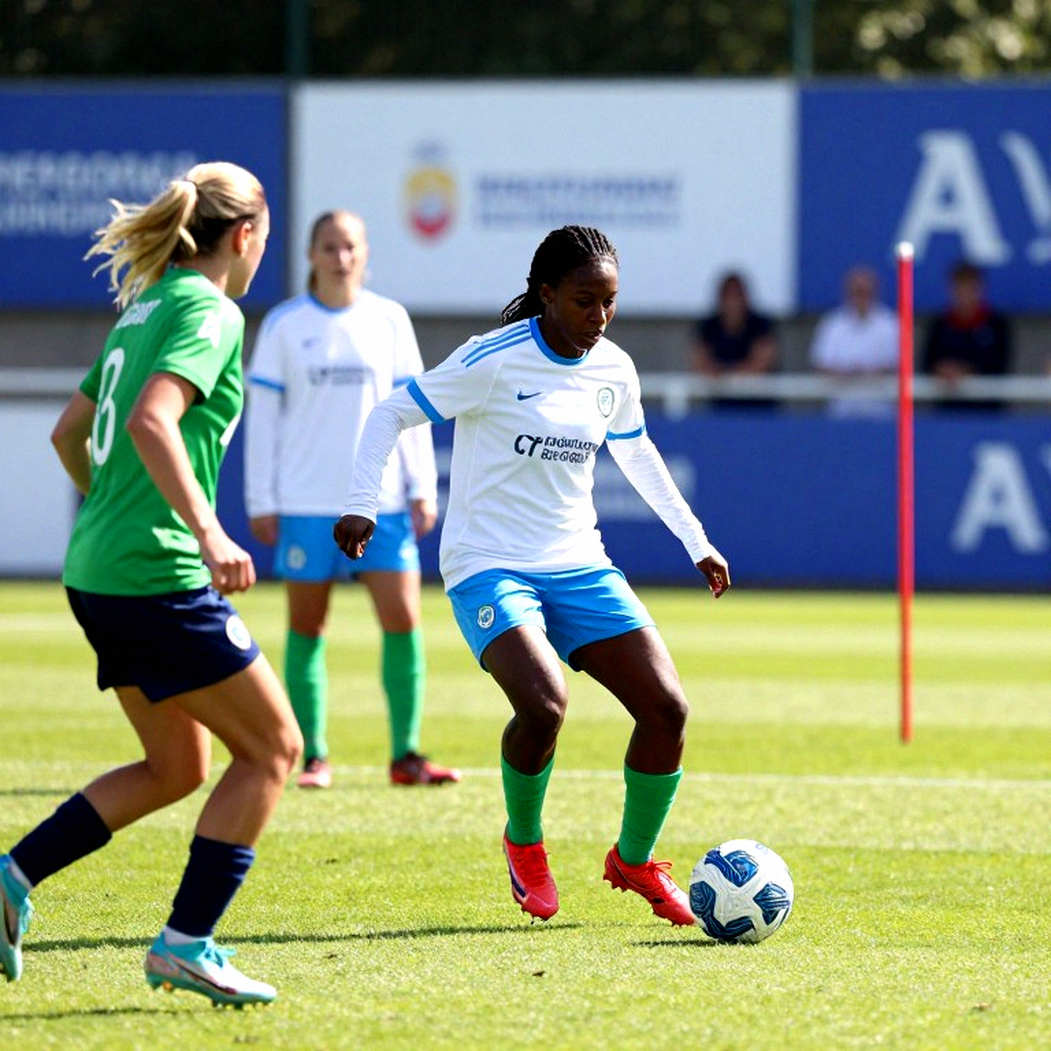
If growth is near its ceiling in the men's game, it has barely started in the women's game. More than 90,000 spectators at Camp Nou for a Barcelona women's fixture, a successful Euro 2026 in Switzerland and rising attendances across Europe's top leagues are clear evidence. But the growth is uneven. Top clubs have resources, smaller ones do not; some countries have professional structures, others remain semi-professional. The biggest challenge is the same calendar problem — women players also face the double load of international windows and club seasons, except with less squad depth. Sponsorship and broadcast rights have grown, but investment often still arrives on the back of the men's team brand. That dependence will fall when women's teams build their own identity and audience. Several clubs now treat the women's side as a separate business unit, which is the right direction provided it is not used merely as an accounting device.
Conclusion: four questions without answers
First, the calendar. Is the gain from more matches equal to the price paid in player health and quality of play? Until player unions have real decision-making power, the debate will remain statements rather than solutions. Second, money. Are financial rules levelling competition, or only penalising clubs already behind? While revenue sources remain unequal, the fairness of the rules will stay contested. Third, data. Is analysis helping us understand the game or turning it into a game of metrics? The best coaches will be those who can read numbers and connect them to what happens on the grass. Fourth, the audience. Can football keep its local support while its economic centre shifts toward a global audience? This is the hardest question, because no single club, league or federation owns the answer.
All four share one element: balance. Football has always run on tension between opposites — business and sport, global and local, data and intuition, outcome and process. Over the past decade that balance has tilted toward business, global reach and data. The question is not whether the tilt was wrong; it is whether the will and capacity to pull it back toward the middle will exist in the next decade. That answer will be given in boardrooms, not on pitches. And its effect will be seen on pitches first.