
Kabaddi's New Era: From the Mud Akhada to the Broadcast Screen
Q: कबड्डी क्या है? — यह एक संपर्क खेल है जिसमें एक रेडर तीस सेकंड के भीतर, लगातार "कबड्डी-कबड्डी" का उच्चारण करते हुए, विरोधी आधे हिस्से में जाकर अंक अर्जित करता है और डिफ़ेंडर उसे रोकते हैं। Q: प्रो कबड्डी लीग कब शुरू हुई? — 2014 में, आठ फ़्रैंचाइज़ी टीमों के साथ; बाद में टीमों की संख्या और शहरों का दायरा बढ़ा। इसने खिलाड़ियों के लिए पेशेवर अनुबंध और नीलामी आधारित आय का रास्ता खोला। Q: कबड्डी किन बड़े अंतरराष्ट्रीय आयोजनों का हिस्सा है? — एशियाई खेलों में कबड्डी 1990 (बीजिंग) से शामिल है; पुरुष वर्ग में भारत सबसे सफल टीम रहा है, जबकि 2018 जकार्ता में ईरान ने स्वर्ण जीता। कबड्डी विश्व कप भी आयोजित होता है। Q: भारत में कबड्डी की मुख्य चुनौतियाँ क्या हैं? — लीग-केंद्रित कैलेंडर, जमीनी स्तर पर संगठित टैलेंट पाइपलाइन की कमी, चोट प्रबंधन और खेल-विज्ञान का असमान विस्तार, तथा महिलाओं के लिए व्यावसायिक लीग का अभाव। Q: महिला कबड्डी की स्थिति क्या है? — अंतरराष्ट्रीय स्तर पर भारत मज़बूत है, लेकिन घरेलू स्तर पर पुरुष लीग जैसा व्यावसायिक मंच अभी नहीं है, जिससे आजीविका की खाई बनी रहती है।
It is six in the morning. The mud akhada on the outskirts of a village in Haryana is damp with dew. Eight or ten young men in their early twenties place two baskets to mark the lines of the ground while an elderly coach stands with a rope in his hand. Any player who cannot hold his breath for a full thirty seconds must go back inside the rope. This scene repeats itself every morning in hundreds of villages across northern, western and southern India. These akhadas are the real factory of the sport: players come out of them, their endurance and their understanding of tactics are built here, and from here begins the journey that one day ends on a large television screen.
In the last decade both the length and the width of that journey have changed. Kabaddi, long dismissed as a rustic fairground game and kept outside the perimeter of serious sports journalism, is now discussed in the same language as cricket and football — franchise auctions, player contracts, broadcast rights, data analysis and sports science. This change did not arrive in a single year. It is the result of a long struggle by administrators, coaches, broadcasters and above all the players, who spent the most productive years of their lives proving that this sport deserved to be taken seriously.
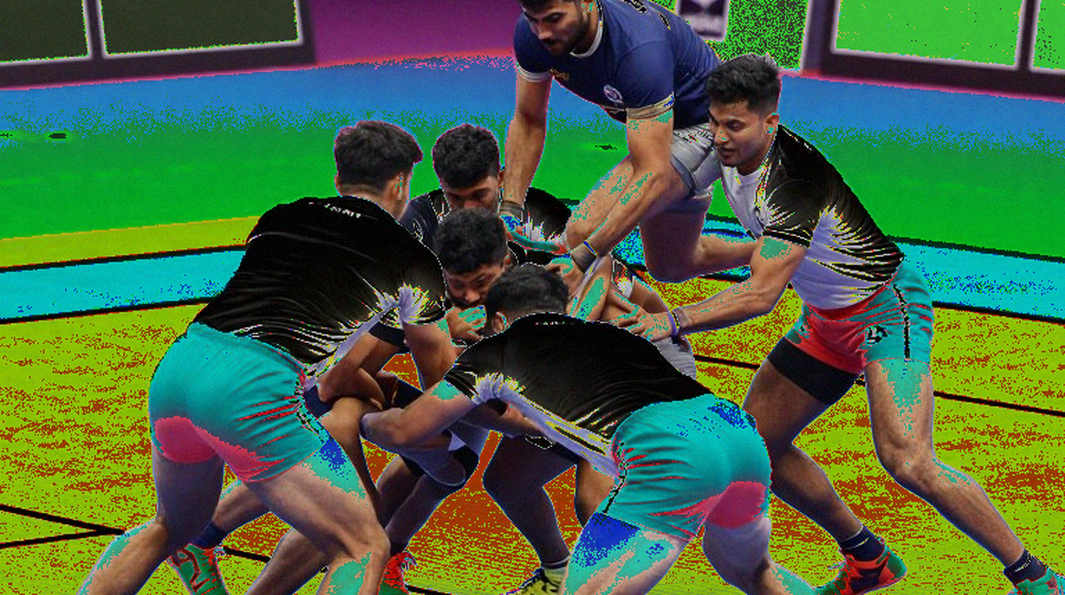
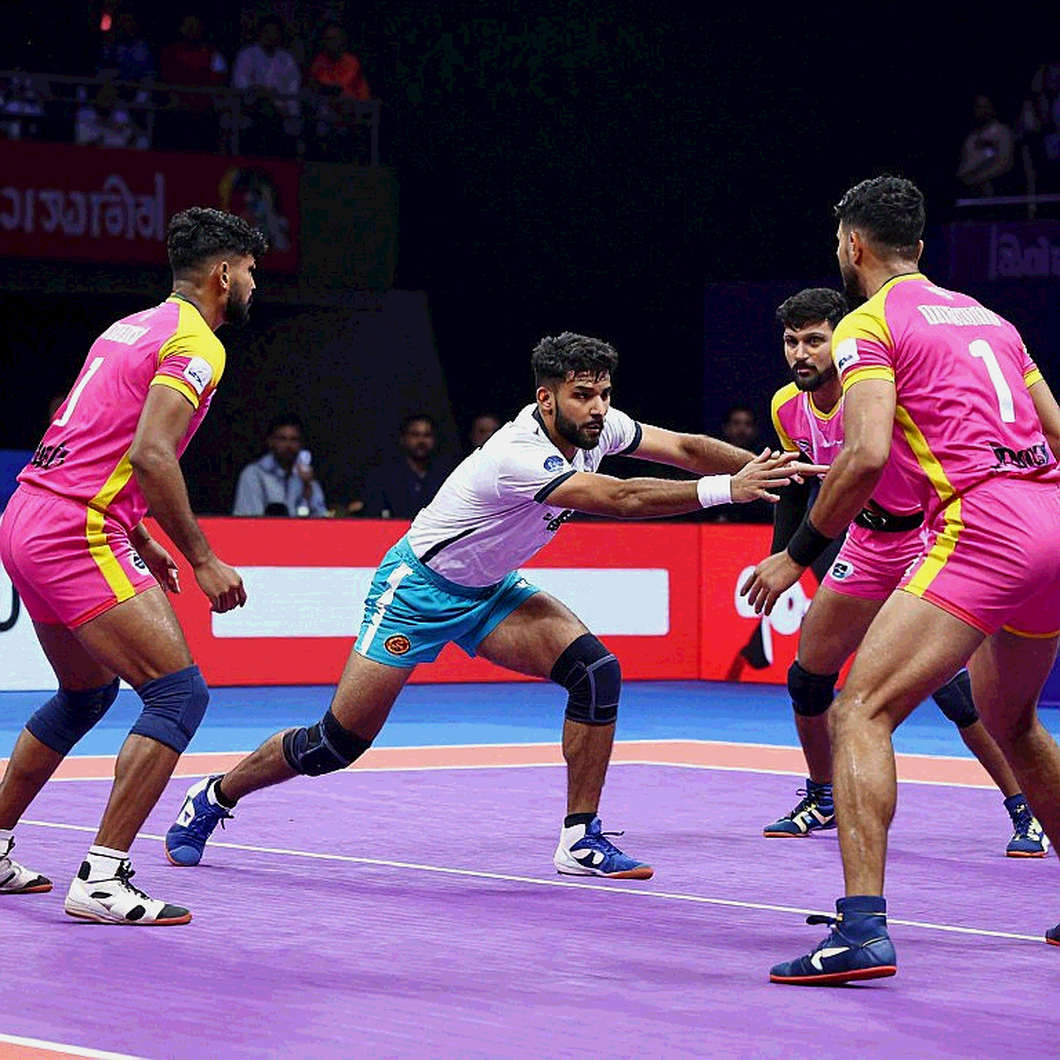
The fabric of the game is simple, and that is perhaps its greatest strength. A raider crosses into the half occupied by seven opponents, must return within thirty seconds without being caught, and must not let his breath break on the way — that is the chant of "kabaddi, kabaddi" that gave the sport its name. On the other side seven defenders combine to stop that raider. The rules are so direct that a spectator standing in a lane understands at first glance who is ahead. Yet internally the sport is intensely complex: breath control, the speed of reading an opponent's weakness, the collective thinking of a defensive unit, and a decision taken in a tenth of a second. That is why kabaddi is as easy to watch as it is hard to play.
The year 2026 is treated as a dividing line in the history of the sport. That year the Pro Kabaddi League began with eight franchise teams. The change was not merely one of broadcast. The game was brought onto the mat, adapted for television, its rules trimmed to match the patience of viewers and, most importantly, its players were connected to a market where their value was set by performance rather than by a government job quota. The number of teams later grew, new cities joined and the league's geography spread across the country. A sport that once revolved around state-level tournaments and railway and police teams became part of a professional calendar.
The most concrete effect of this shift was felt in the player's pocket and in his family. Earlier even a good kabaddi player waited for a secure future in a government job — railways, police, banks. The sport was not a means of livelihood but a route to employment. After the league arrived, a class of fully professional player emerged: contracts, bids at auction, endorsements, fitness trainers, physiotherapists and nutritionists. That is no small change. It means a boy from a village can now choose his sport as a career — although that option remains as uncertain as in any professional sport, because injury, form and the auction market can each change the direction of a career in a single season.
Inside the game, the biggest technical change has come at the level of strategy. Earlier the coach's instinct, experience and eye were the main weapons. Now video analysis, reports on an opponent's raiding patterns and data on defenders' tackling technique are part of match preparation. From which angle a particular raider's speed comes, which defender drifts early towards the bonus line, which pair's covering has the largest gap — these questions are no longer tea-shop talk but the agenda of analysis meetings. Playing on the mat has also changed body movement and injury patterns; the grip of a mud akhada and the speed of a mat demand two different techniques, and players of the older generation have repeatedly pointed to that gap.
Rule changes have reshaped strategy as well. The do-or-die raid forced raiders not to flee risk but to manage it. The bonus line turned small, precise touches into a route to big scores. The super tackle converted defence from a unit that merely stops into a unit that scores. The effect is that kabaddi today is faster, more aggressive and less dependent on luck than before. Old matches are remembered in which both teams stayed cautious until the first half ended; today the score keeps changing until the last raid, and that is what keeps the viewer tied to the screen.
But there is one weak link in this story — the structure at the grassroots. The glamour the league created at the top demands an equally strong base to the pyramid, more than ever before. Tournaments in villages still happen, they still happen at fairs, and kabaddi still appears on the sports list of schools and colleges — but an organised, continuous and scientific talent pipeline remains the single biggest need. Talent scouting still often depends on chance: a coach travels to a village, an elderly trainer pushes his disciple to a league trial, and sometimes that link breaks. The capacity of state sports administrations varies widely, and that variation decides which region will produce the next generation of players and which will be left behind.
Women's kabaddi is the most contradictory part of this picture. On the international stage India's women's team has had a record almost as impressive as the men's — since women's kabaddi was included in the Asian Games, India has remained at the top and has left teams from around the world behind. But domestically there is no league of the kind that was created for male players. Until a professional women's league arrives, a gap in livelihood will remain behind the shine of international medals. This is not only a question of equality; it is also a question of the sport's overall expansion. If half the population does not have a full pathway to play, the talent pool will always be deprived of half its strength.
The international landscape is changing too. Kabaddi is no longer a one-sided Indian sport. Iran is the clearest example — its team developed a distinct style of defence, pushed India hard in several major contests and has also won gold at the Asian Games. The participation of countries such as Bangladesh, South Korea, Chinese Taipei, Thailand and Kenya shows that the sport's spread is not limited to South Asia. In return, Indian kabaddi has received a new challenge: every international fixture is no longer as "easy" as it once was, and that is a good sign. Healthy competition is precisely what gives the political argument for pushing a sport towards the Olympic programme.
The challenges are equally real. The current domestic calendar is league-centric; for much of the year a player has no high-level competition. That gap will not be filled without national-level tournaments, a continuous age-group series and a strong second-tier league. Injury is another major question: with the rising intensity of raiding and tackling, knee, ankle and shoulder injuries have increased, and not every team has a full sports-science setup. Franchise economics are delicate as well — a team's success rests on viewership, sponsorship and ticket revenue, and in the months outside the league the sport's media presence falls to almost nothing. Beyond this, the framework for monitoring risks such as betting and match-fixing needs to be as strong as the sport's growing popularity demands.
Amid all this one thing is clear: kabaddi's greatest capital is its simplicity, and its greatest challenge is to become professional without losing that simplicity. A sport that needs only a ground, a line and a breath does not require a twenty-crore stadium anywhere to grow. What it needs is continuous competition, training for coaches, an equal stage for women, and outreach to those villages where an akhada still exists but no path is visible.
Go back to that akhada in Haryana. The coach removes the rope and the boys run. Nobody knows today who among them is who. In ten years they might. That is the real story of this sport — it is being written again every morning, in every village.
संबंधित खिलाड़ी
अनुशंसित
The Fourteenth Name Missing from Ahmedabad's Draw Sheet: Pakistan's Kabaddi Withdrawal and a Story That Never Gets Past the Question2026-10-22
Commonwealth Kabaddi Championship 2026: Surjeet Singh Captain, Naveen Kumar Vice-Captain — and the Three Questions the Press Release Never Answers2026-10-22
The Ledger Had a Column for Day Jobs: Women's Kabaddi's Fourth Gold Rests on an Appointment Letter2026-10-30
Publication Held: Source Material Unavailable — Kabaddi News Report Not Generated2026-10-31
Kabaddi's Second Life: From the Clay Akhara to Broadcasting Rights2026-11-01
What the Ahmedabad Points Table Didn't Say: Score Difference, Bangladesh and Iran's Absence at the Commonwealth Kabaddi Championship 20262026-10-30
Commonwealth Kabaddi Championship 2026: Surjeet Singh Captain, Naveen Kumar Vice-Captain — and Two Lines in the Release That Cannot Both Be True2026-10-22
Commonwealth Kabaddi Championship 2026: Surjeet Singh Captain, Naveen Kumar Vice-Captain — A Decision Whose Evidence Comes From Paper, Not the Mat2026-10-22
अनुशंसित
The Hidden Cost of Kabaddi: Thirty-Second Raids, Year-Long Load on Ankles and Knees2026-11-01
Kabaddi's New Era: From the Mud Akhada to the Broadcast Screen2026-11-02
India vs Nigeria: Three Wins, Iran's Absence, and the Real Test of Surjeet Singh's Defence2026-10-28
18–27: The 40 Seconds of Jakarta That No Scorebook Recorded2026-10-31
The Fourteenth Name Missing from Ahmedabad's Draw Sheet: Pakistan's Kabaddi Withdrawal and a Story That Never Gets Past the Question2026-10-22
Sixty-Two Matches, Thirteen Nations, and the One Name Missing From Ahmedabad2026-10-22
118 Tackles, Nine Ankles: Kabaddi's Injuries Are Written in the Calendar, Not in Chance2026-11-01
Publication Held: Source Material Unavailable — Kabaddi News Report Not Generated2026-10-31